


HongBing Wang, PhD
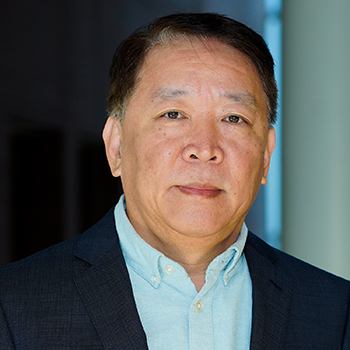
Professor and Interim Chair, Department of Pharmaceutical Sciences
University of Maryland School of Pharmacy
Hongbing Wang is an internationally recognized leader in drug metabolism, xenobiotic receptors, and drug-induced liver injury whose work has reshaped how pharmacy researchers understand and predict drug response and toxicity. He also is a sought-after teacher and dedicated mentor who values his service to the University of Maryland School of Pharmacy (UMSOP), the University of Maryland, Baltimore (UMB), and his community.
Dr. Wang’s research centers on how the liver “decides” whether a drug will help,harm, or simply pass through the body, with a focus on nuclear receptor proteins. During his time at UMSOP, he has identified how these molecular sensors drive drug bioactivation, detoxification, and toxicity. His work has revealed mechanisms that underlie drug-drug interactions, metabolic liver disease, and hepatocellular carcinoma, and it has directly informed the evaluation of drug-induced liver injury.
Wang’s research program also has focused on translational toxicology andregulatory science. His work on the SLC13A5 gene and hepatic energyhomeostasis has opened new avenues in liver cancer biology and metabolic disease. His studies of microbiota-derived and dietary metabolites acting throughthe constitutive androstane receptor (CAR) and the pregnane X receptor haverevealed unexpected pathways that maintain gut-liver homeostasis. During theCOVID-19 pandemic, Wang’s mechanistic dissection of remdesivir-inducedhepatotoxicity and the protective role of the drug dexamethasone had immediate relevance for patient care and regulatory decision-making.
He has written more than 120 peer-reviewed articles in prestigious, field-defining journals such as the Journal of Medicinal Chemistry, Nature Communications, Hepatology Communications, Molecular Pharmacology, Drug Metabolism and Disposition, Pharmaceutical Research, Clinical and Translational Science, and the Journal of Biological Chemistry.
Wang’s research program has been continuously funded by the National Institutes of Health (NIH) and Food and Drug Administration (FDA), including multipleR01 NIH grants and major FDA U01 and supplement awards. He has been awarded patents on CAR activators and advanced liver-on-a-chip platforms and is frequently invited to speak at prestigious national and international conferences.
Wang is deeply committed to education and mentoring. He teaches in the professional PharmD program and several graduate programs at UMSOP. One of his most popular contributions to teaching is his course in pharmacogenomics,which is offered to the school’s PharmD and PhD students. He is a past recipientof the prestigious American Association of Colleges of Pharmacy Teacher of theYear Award.
Wang is a dedicated mentor, having trained more than 50 PhD students, postdoctoral fellows, and undergraduate researchers, along with numerous PharmD students. His trainees have gone on to assume leadership roles in the pharmaceutical industry and at the FDA, NIH, and research universities.
During his 20 years at UMSOP, Dr. Wang has taken on several leadership roles in the Department of Pharmaceutical Sciences (PSC), including program chairof experimental and translational therapeutics (2015-2023) and interim chair of PSC (since 2023).
He earned his PhD in toxicology from Shanghai Medical University (now Fudan University Medical Center) in China and completed his postdoctoral training at the National Institute of Environmental Health Sciences at Research Triangle Park in North Carolina and the Eshelman School of Pharmacy at the University of North Carolina at Chapel Hill.


