‘We the People’ Symposium Looks Back at Unsung Heroes of Reconstruction
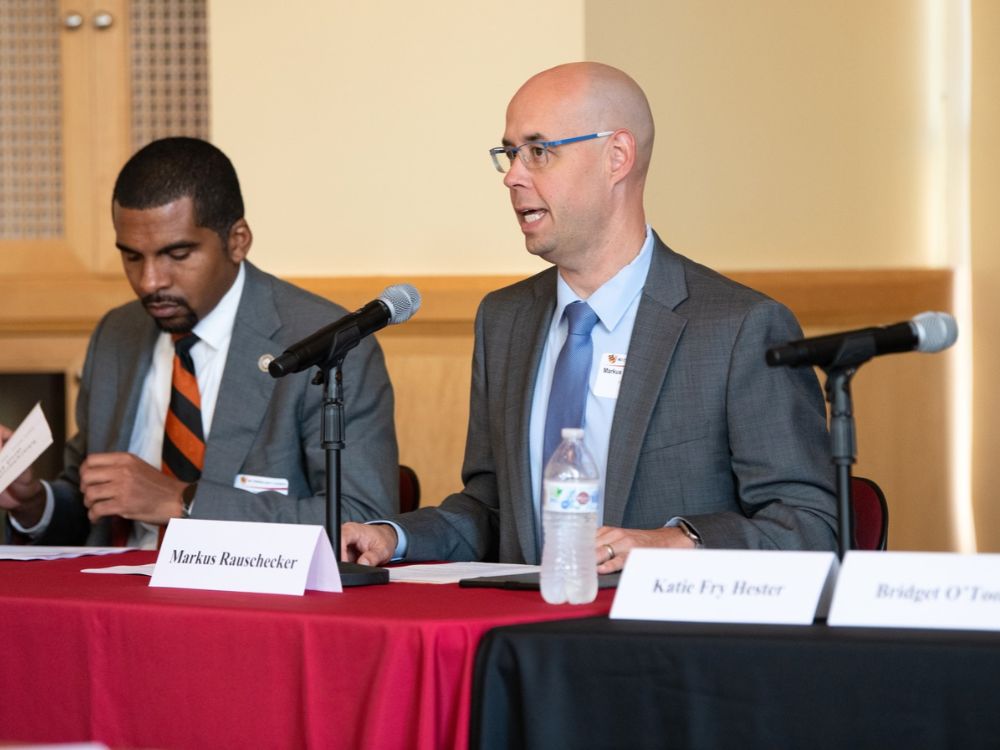
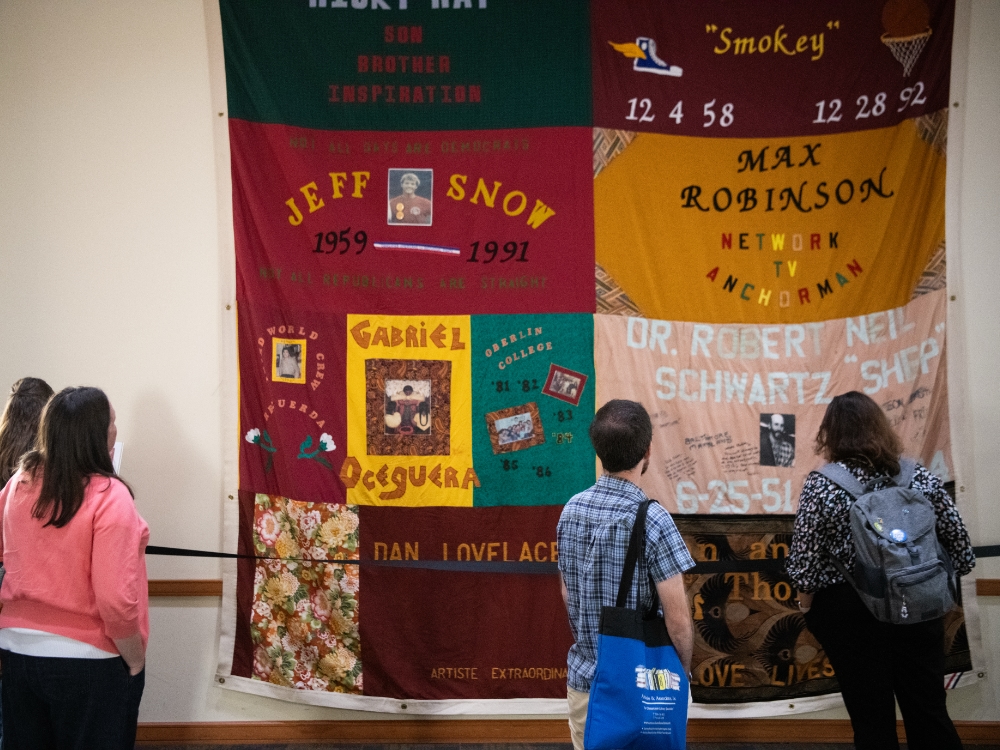
Civil rights lawyers, scholars, journalists, and a federal appeals judge gathered at the University of Maryland Francis King Carey School of Law on Oct. 23 for "We the People: Lessons from the Unsung Re-founders of Our Nation," a symposium on how ordinary Black Americans shaped the refounding of the country after the Civil War and how to proceed in the face of new civil rights challenges.
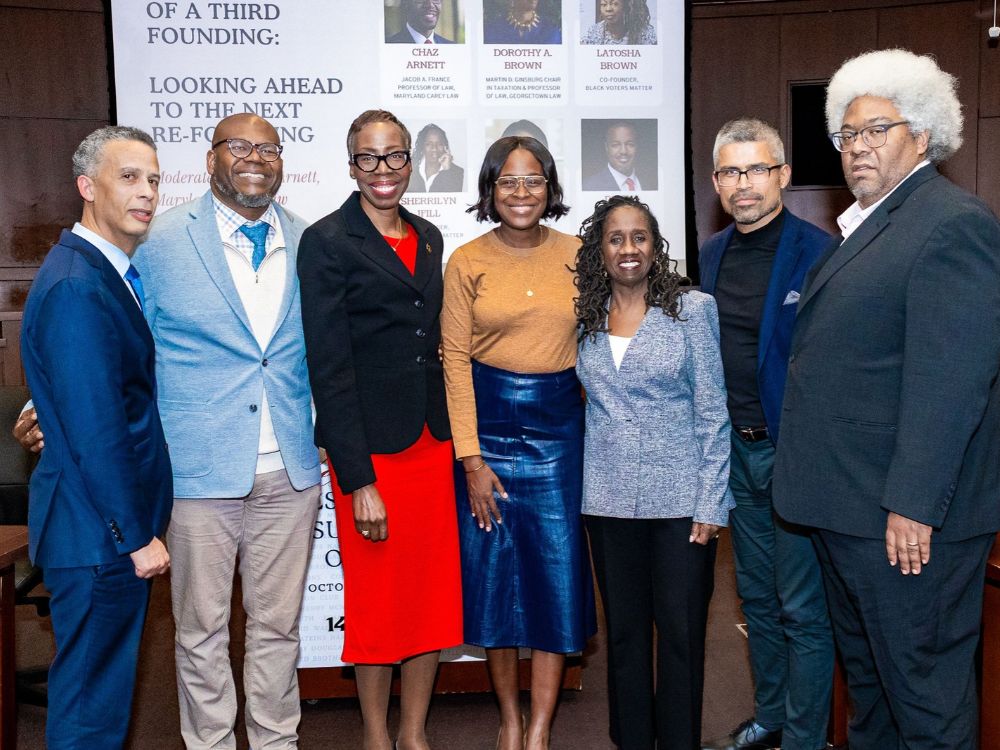
(L-R) Michael Pinard, Jason Johnson, Monique Dixon, Errin Haines, Sherrilyn Ifill, Cristian Farias, Elie Mystal.
The daylong symposium was co-hosted by the law school's Gibson-Banks Center for Race and the Law and the 14th Amendment Center for Law and Democracy at Howard University School of Law.
"Our country was founded on principles of equality, life, liberty, and the pursuit of happiness, but we know that Black people and other people of color did not enjoy these principles, and these principles are currently under attack today," said Monique Dixon, JD, executive director of the Gibson-Banks Center, noting that the symposium came during the nation's 250th anniversary.
"All of us, lawyers, teachers, writers, poets, artists, students, can be and must be refounders of the next iteration of democracy in our country," said Sherrilyn Ifill, JD, founding director of the 14th Amendment Center; former president and director-counsel of the NAACP Legal Defense Fund; and professor at Maryland Carey Law from 1993-2013.
Ifill said the nation's refounding after the Civil War was shaped not only by the members of Congress who wrote the 13th, 14th and 15th amendments but also by activists, clergy, and formerly enslaved people.
The Hon. Roger L. Gregory of the 4th U.S. Circuit Court of Appeals, the court's first Black judge and a former chief judge, made a similar case in his keynote remarks. He honored enslaved people and their descendants who held on to their dignity and organized to win basic protections while seeking a full place in the nation after the war.
Recalling his own adoption as an infant with asthma and burn scars, Gregory said of those generations, "Even with the scars and the burns and all those things, they still stood tall. And the question is, who will carry on the journey for them?"
Michael Pinard, JD, faculty director of the Gibson-Banks Center, opened his remarks with a photograph of an 1870 parade on Baltimore Street celebrating the 15th Amendment where Frederick Douglass spoke to a crowd of 20,000 exhorting them to “educate your sons and daughters,” and “build on for those that come after you” as reported in the Baltimore American.
The celebration was premature, Pinard said. In the following years, Black voters in Baltimore were paid not to vote, attacked at polling places, and jailed on Election Day. In the early 1900s, Maryland legislators pushed disenfranchisement bills, one drafted by John Prentiss Poe, then dean of the law school. Black Baltimoreans organized across the state to defeat them.
Pinard described the city as "a laboratory where various types of racial oppression and violence, including Jim Crow laws, were concocted, incubated, and tested," and also as a center of resistance. The Mutual United Brotherhood of Liberty, founded in Baltimore in 1885 by Black clergy and lawyers, won the right of Black lawyers to practice in the city's courts, pressed the city to hire Black teachers, and helped form suffrage leagues.
Those activists, Pinard said, are "checking on us in these times, as well as checking us."
Three panels featured scholars, civil rights advocates, and journalists from around the nation. Dixon moderated a discussion of how Black and Asian thinkers shaped ideas of citizenship, with Maryland Carey Law professor Paula Monopoli, JD, Bethany Li of the Asian American Legal Defense and Education Fund, Kate Masur of Northwestern University and Melvin L. Rogers of Brown University.
Pinard led a conversation on the legacy of the Black press with journalists including Jason Johnson, Morgan State University and MSNBC contributor; Cristian Farias, Inquest; Errin Haines, The 19th; and Elie Mystal, The Nation. Maryland Carey Law professor Chaz Arnett, JD, moderated the closing panel on a "third founding," in which Ifill, LaTosha Brown of Black Voters Matter, Deuel Ross of the NAACP Legal Defense Fund and others discussed voting rights, reparations, criminal justice reform, and the Supreme Court.
The audience included many of the law school's graduates and civil rights practitioners from across Maryland, along with Elaine Jones, former director-counsel of the NAACP Legal Defense Fund. Emeritus professors Taunya Lovell Banks, JD, and Larry Gibson, JD, the center's namesakes and the first Black woman and man to earn tenure at the law school, also attended.
Glendora Hughes, JD, general counsel for the Maryland Commission on Civil Rights and a 1978 graduate of the law school, said she came to discuss how to respond to what she described as a systemic reduction in federal civil rights protections, and what comes next. "We will come out of it, but what is the plan going to be, and what things should we be working for now so that we can hit the ground running," she said.
Initially, Banks shared concerns about where the country is headed. "I'm especially worried about how you teach law in a world where it appears that the rule of law no longer exists," she said.
By midafternoon her outlook had brightened. "Already I'm coming out of this much more positive than I was when I went in," Banks said. “This is exactly the kind of work I hoped the Gibson-Banks Center would do.”