

October 2026 Scholar of the Month: Lisa D'Affronte DDS

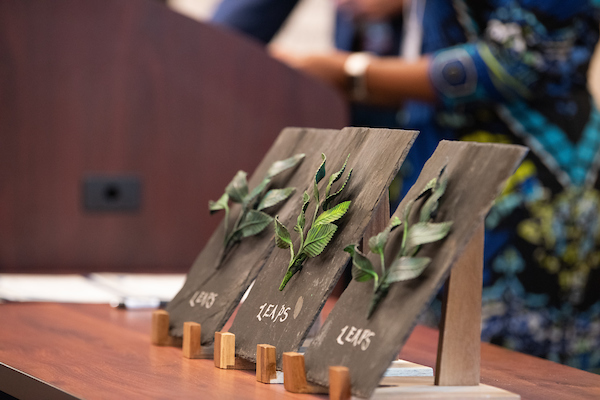
Lisa D'Affronte DDS, Clinical Assistant Professor, Department of Comprehensive Dentistry, Division Director, Division of General Practice, has received the inaugural, LEAPS Educational Scholar of the Month award in recognition of her advancement of visionary education. D’Affronte’s educational scholarship includes publication in the Journal of Dental Education as well as multiple presentations, such as at the upcoming American Dental Education Association Conference on the “One-Year Outcomes of an Innovative Interprofessional Referral Initiative Linking Nursing and Dental Education”. This project, funded by UMB’s Center for Interprofessional Education, included training for students on social determinants of health and interprofessional education competency.
Please join LEAPS in congratulating Lisa D’Affronte on this well-deserved recognition!
Learn more about her work: Lisa D’Affronte Bio
---------------------------------------------------------------------------------------------
The LEAPS team recently asked D’Affronte to share more about her educational research, how it could be applied to other disciplines, and what’s next for her work.
Tell us about what you’re researching
My scholarly work aims to prepare dental students to deliver the most technically current patient care, while also taking into consideration a collaborative and compassionate approach. One arm of my educational research has focused on digital dentistry in education. I have focused on this through the establishment and integration of the digital workflow in clinical education as well as faculty calibration, which is critical to success. A second arm of my educational research has focused on developing patient-centered skills and improving access to care. Experiential learning such as the Poverty Simulation have helped students improve empathy and better prepared them for their first direct patient care experience. My grant-funded interprofessional initiative has opened a door for patients in great need to access dental care, while also teaching students the importance of interprofessional collaboration. Together, these efforts are meant to improve how future dentists are trained in a digital world, and to expand care to communities that have the greatest need.
What are you discovering?
Through my work in digital technology implementation in educational settings, I am discovering that many professional schools share the same challenges. In sharing this knowledge, dental schools across the nation have been able to improve their approaches in an effort to achieve the shared goal to create a workforce ready graduate.
In my work related to patient-centered skills and access to care, I am seeing firsthand the critical skills that students are learning through hands-on experiences. Simulations are a positive introduction to these concepts, but students truly obtain understanding when treating a patient directly. The students in my interprofessional initiative have reported hugely positive benefits, including a better understanding of the challenges patients face and the importance of working as part of a healthcare team.
How might this relate to other disciplines here at UMB?
The use of technology in education is widespread, continuously evolving, and holds inherent challenges when trying to integrate it broadly. The challenges and benefits that I have discovered in my educational research, including faculty calibration, continued training and cost barriers, can be applied to other disciplines as well. Teaching students about compassionate care, including understanding access to care issues for patients, is critical to all professions. For example, the Poverty Simulation described in my publication in the European Journal of Dental Education can be applied to any program, as it exemplifies many challenges patients can face when trying to access health care. In addition, my ongoing grant-funded interprofessional initiative teaches the importance of interprofessional collaboration to students, which is critical to all professions to achieve a patient-centered care approach.
What's next?
My hope is to continue the referral system that has been established with the School of Nursing and build on our progress. My team and I are looking for additional funding sources in hopes of expanding what we have already started. The data from this initiative may even help to encourage a new financial structure at the School of Dentistry in order to allow for sustainability beyond grant funding.
LEAPS welcomes you to nominate yourself or a colleague for Scholar of the Month: Scholar of the Month Nomination Form