


Where Dentistry Cut Its Teeth
In 1840, America was still a young nation.
The White House had been occupied for only four decades. Railroads were beginning to connect cities and states. The country was expanding westward. Scientific medicine was still in its infancy.
For most Americans, a visit to the dentist was something to be feared. Dental care often was performed by self-trained practitioners, barbers, or craftsmen with little formal education. There were no standardized training programs, no professional degrees, and few scientific standards guiding the practice of dentistry.
Then, in Baltimore, a revolutionary idea took shape.
What if dentistry were treated not as a trade, but as a profession?
What if dentists were educated through rigorous scientific training, held to consistent standards, and recognized as essential contributors to public health?
Those questions led to the 1840 founding of the Baltimore College of Dental Surgery — known today as the University of Maryland School of Dentistry (UMSOD) — and changed the course of health care in America and around the world.
As the United States celebrates its 250th birthday this year, the story of UMSOD is about more than just the history of a school. It is the story of how American innovation helped create an entirely new profession and transformed the health of generations.
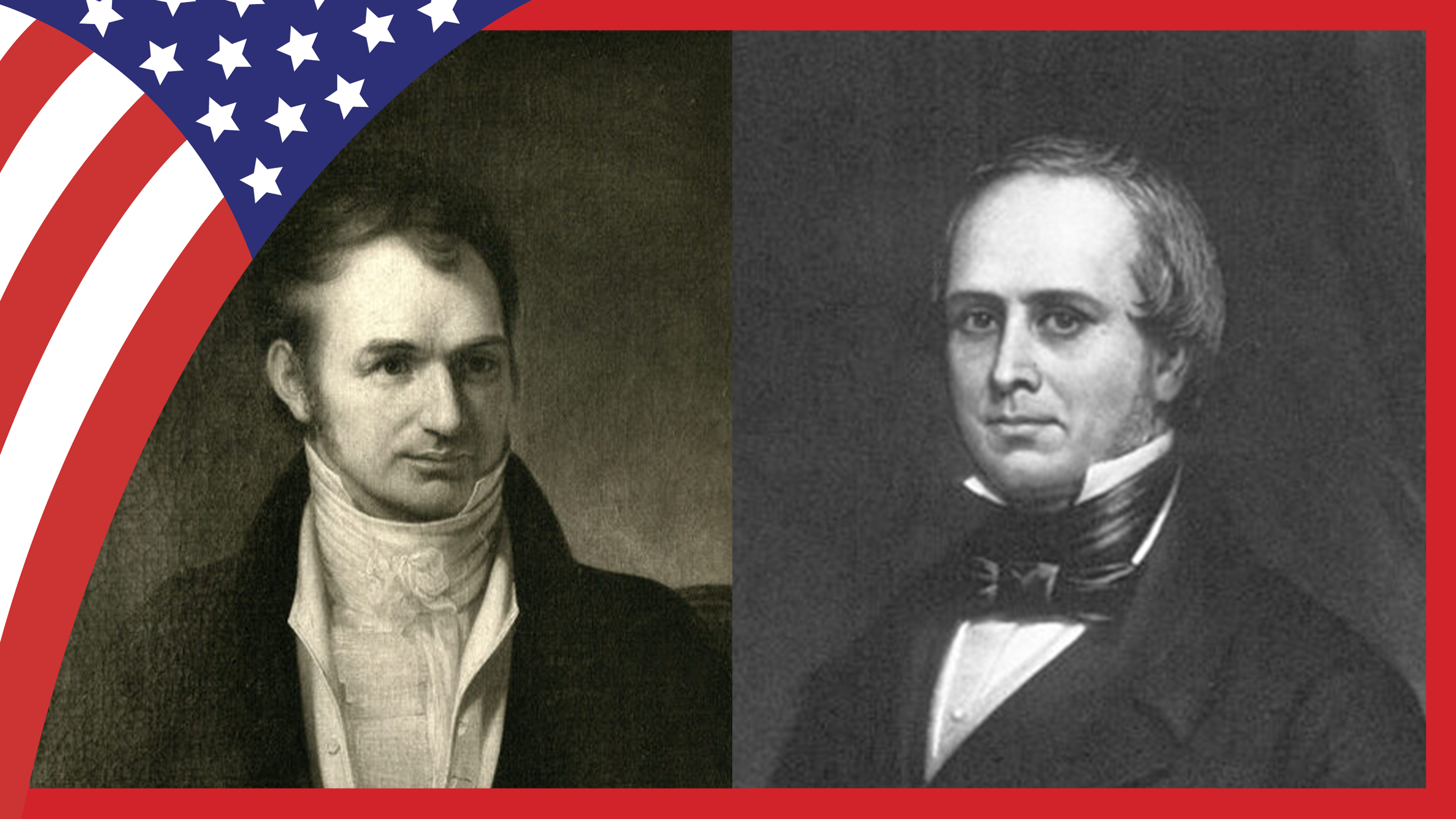
Drs. Horace H. Hayden and Chapin A. Harris, the founders of the Baltimore College of Dental Surgery, understood something that many people of their era did not: Oral health matters.
At a time when tooth loss was often accepted as an inevitable part of life, they envisioned a future in which dental care would be grounded in science, education, and prevention. Their institution became the world’s first dental college and established a model for dental education that would soon spread across the nation and eventually the globe.
;-Dentistry-Graduate-Historical-Marker.jpg)
The School of Dentistry historical marker, located in front of the UMSOD building on West Baltimore Street, is a popular spot for dental and dental hygiene students to take photos after graduation ceremonies.
Developing the DDS Degree
Perhaps the school’s most enduring contribution was the creation of the Doctor of Dental Surgery, or DDS, degree, which was the first dental degree awarded anywhere in the world.
Today, DDS remains one of the most recognized professional credentials in health care. But in 1840, it represented something entirely new: a formal recognition that dentistry required specialized knowledge, advanced training, and professional standards.
The impact was profound.
As other schools adopted the model pioneered in Baltimore, dentistry evolved from an informal trade into a respected health profession. Scientific advancements improved treatments. New standards elevated patient care. Research expanded the understanding of oral disease. And generations of dentists who were trained under the principles established in Baltimore helped improve the health and quality of life of millions.
The story of UMSOD also is a testament to the evolution of U.S. health care itself.
Over the past 186 years, the nation’s understanding of oral health has changed dramatically. Once viewed as separate from overall well-being, oral health is recognized as an essential component of well-being. Researchers have demonstrated connections between oral health and conditions such as heart disease, diabetes, stroke, and adverse pregnancy outcomes. Dentists play critical roles in the early detection of disease, prevention, and patient education.
UMSOD has been at the forefront of that transformation.
Leading the Way on Oral Health
The school’s graduates have served communities large and small, cared for military personnel and veterans, educated future practitioners, and helped ensure that oral health remains an integral part of the United States’ health care system. Through generations of faculty members, researchers, clinicians, and students, UMSOD also has advanced discoveries that have shaped dental practice and improved patient care.
Among its more recent innovations, in 2023, the school launched its Division of Artificial Intelligence (AI) Research, which aims to use AI to enhance diagnostics and improve patient outcomes. UMSOD practitioners also are using AI and digital dentistry to ensure the accurate placement of dental implants, diagnose cancer earlier, and develop personalized treatment plans.
The school’s impact extends beyond innovation and education. It also reflects a longstanding commitment to service.
Located in the heart of Baltimore, UMSOD has long provided care to individuals and families who might otherwise struggle to access dental services. Through community clinics, outreach programs, and partnerships, the school has worked to improve oral health outcomes while preparing future dentists to serve diverse populations and address health disparities.
That commitment aligns closely with the broader mission of the University of Maryland, Baltimore (UMB): to improve the human condition and serve the public good.
The Foundation of Dentistry
Today, UMSOD remains a global leader in dental education, research, and patient care, yet its most significant achievement might be one that is easy to overlook: It helped establish the very foundation upon which modern dentistry was built.
Every dental school that followed. Every dentist who earned a professional degree. Every patient who benefited from advances in oral health care. Each is connected, in some way, to an idea born in Baltimore nearly two centuries ago.
As the United Sates marks 250 years of innovation and progress, UMSOD stands as a reminder that some of the nation’s most important contributions are not measured by buildings or inventions alone. They are measured by healthier lives, stronger communities, and professions that improve the well-being of millions.
In 1840, a group of visionaries in Baltimore set out to elevate dentistry through education and science.
In doing so, a profession was born.
And where American dentistry began, the legacy continues at UMB.
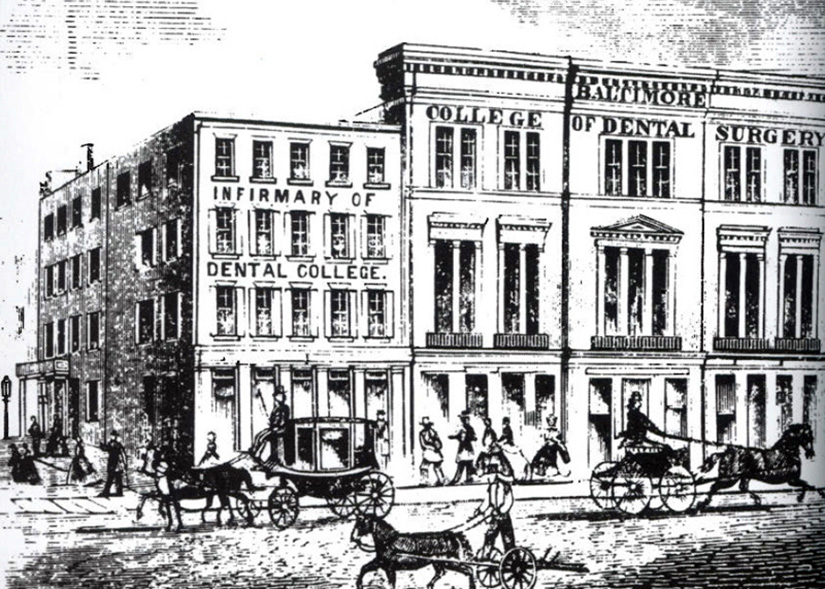 The Baltimore College of Dental Surgery occupied this building at Hanover and Lombard streets from 1853 to 1872.
Learn more about the history of UMSOD and dentistry at the Dr. Samuel D. Harris National Museum of Dentistry website. The museum is located on UMB’s campus, next to Davidge Hall, at 31 S. Greene St. Baltimore, MD 21201.