


The Patients Medicine Had Forgotten
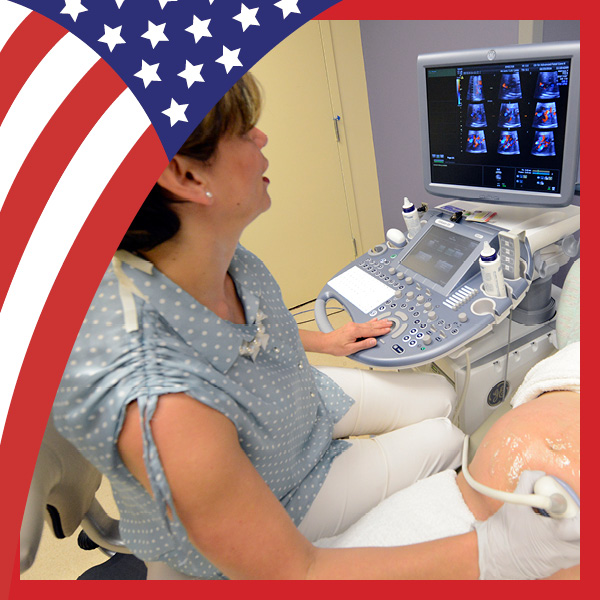
Since appointing the world’s first academic chair of diseases of women and children in 1867, the School of Medicine has stood at the forefront of improving health care for two once-overlooked groups.
By the middle of the 19th century, American medicine was changing rapidly. Hospitals were growing, medical schools were becoming more specialized, and physicians were beginning to move beyond tradition and toward science, asking not simply how diseases could be treated, but why they occurred in the first place.
The Civil War had accelerated that transformation, forcing doctors to confront injury, infection, and human suffering on a scale the nation had never experienced. Still, two groups of patients remained largely overlooked: women and children.
They had always been treated, of course. Babies were delivered, childhood illnesses attended to, and diseases affecting women were part of every physician’s practice. But they were rarely regarded as deserving their own body of scientific knowledge. Medical education focused overwhelmingly on adult men, often assuming that women and children were simply smaller or slightly different versions of the same patient.
It was an assumption that had endured for centuries. In 1867, the University of Maryland School of Medicine (UMSOM) challenged that.
That year, the school established the world’s first academic chair of diseases of women and children, appointing William Travis Howard, MD, to lead the new discipline. It was more than a new professorship. It also represented a new way of thinking about medicine itself.
For the first time, a university declared that the health of women and children warranted dedicated teaching, specialized research, and focused clinical expertise. The decision seems almost inevitable today. Every medical school now has departments devoted to obstetrics and gynecology, pediatrics, maternal-fetal medicine, neonatology, pediatric surgery, and countless related specialties. In 1867, however, the idea was remarkably forward-looking.
A Quiet Revolution
The appointment reflected a growing realization that physicians could no longer treat every patient in exactly the same way. Pregnancy was not simply another medical condition. The developing body of a child could not be understood through the lens of adult anatomy. Diseases often presented differently in women than in men. Better outcomes would require doctors willing to devote their careers to studying those differences rather than overlooking them.
It was a quiet revolution, unfolding not on a battlefield or in the halls of government, but inside a medical school classroom.
The timing was significant. America was entering a period of reconstruction and renewal after the Civil War. The country was grappling with questions about citizenship, equality, and who deserved the full benefits of its institutions. Medicine was asking similar questions. Whose health mattered? Whose experiences deserved scientific attention? Who had been left at the margins of medical knowledge?
UMSOM answered in a way that would influence generations of physicians.
Students who once encountered diseases affecting women and children only briefly in their education now studied them as distinct areas of medicine. They learned that childbirth required expertise. They explored childhood development and diseases unique to infancy. They began to recognize that successful medical care depended upon understanding the patient, not simply the illness.
Those ideas spread well beyond Baltimore. As medical schools across the United States and around the world developed departments devoted to women’s health and pediatrics, researchers and clinicians made extraordinary advances in maternal care, infant survival, childhood disease, and reproductive medicine. Safer childbirth, improved surgical techniques, vaccines that protected children from deadly illnesses, and a deeper understanding of child development all grew from the recognition that these patients deserved focused scientific inquiry.
Continuing the Conversation
The work that began in 1867 continues today across the University of Maryland, Baltimore. Researchers seek new treatments for gynecologic cancers and pregnancy complications. Physicians care for women facing high-risk pregnancies and complex reproductive health challenges. Pediatric specialists treat critically ill children while scientists develop vaccines and therapies that protect young lives around the world. Although their tools would be unimaginable to Dr. Howard, their purpose remains remarkably familiar.
The UMB community is continuing a conversation that began more than 150 years ago.
As the United States celebrates its 250th anniversary of its independence in 2026, the story of the world’s first chair of diseases of women and children reminds us that progress is often measured not only by new discoveries, but also by whose lives those discoveries are intended to improve.
America’s history has been marked by a gradual expansion of opportunity and inclusion. Medicine has followed a similar path, broadening its understanding of who deserves specialized knowledge, dedicated research, and compassionate care.
In 1867, UMSOM helped accelerate that change. It recognized that advancing medicine meant looking beyond long-held assumptions and asking whether some patients had been waiting too long to receive the attention they deserved.
More than a century and a half later, that question still defines the best of medicine. It continues to challenge physicians and scientists to see every patient as worthy of understanding, every life as worthy of study, and every generation as an opportunity to do better than the one before.