


Reimagining Medical Education for a New Generation of Physicians
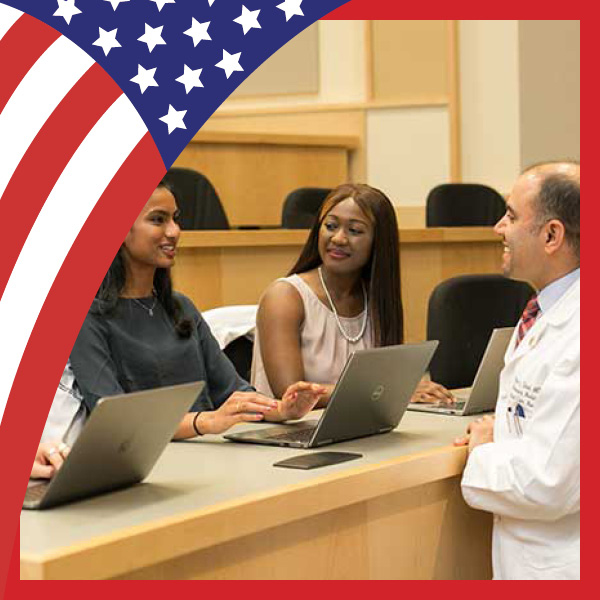
Launched in 2020, the School of Medicine’s ambitious Renaissance Curriculum is designed to prepare medical students for the changing health care environment of the future.
The United States faces a health care landscape that would have been unimaginable to its founders 250 years ago. Advances in genetics, artificial intelligence, telemedicine, and precision medicine are transforming the practice of medicine at an unprecedented pace. Preparing physicians to meet these challenges requires more than teaching scientific facts — it also requires educating adaptable leaders, innovators, and lifelong learners.
At the University of Maryland School of Medicine (UMSOM), the nation's first public medical school, that challenge inspired one of the most ambitious educational transformations in the institution's history: the Renaissance Curriculum.
Launched in 2020, the Renaissance Curriculum represents UMSOM’s first comprehensive curriculum redesign in more than a quarter century. The initiative was championed by former UMSOM Dean E. Albert Reece, MD, PhD, MBA, whose vision for medical education emphasized preparing physicians not only for the medicine of today, but also for the rapidly evolving health care environment of tomorrow. Faculty members, students, and educational experts spent years designing a curriculum that would better prepare graduates to meet the complex needs of patients and communities.
The result was a curriculum designed to develop what UMSOM calls “Renaissance Physicians” — doctors who combine scientific excellence with compassion, leadership, critical thinking, professionalism, and service to society.
For generations, medical education followed a relatively straightforward model: Students spent their first years mastering the basic sciences before transitioning to patient care. The Renaissance Curriculum broke down those traditional barriers. Instead, students begin integrating scientific knowledge with clinical experiences from the earliest stages of their education, allowing them to understand not only how diseases develop, but also how they affect patients, families, and communities.
The curriculum emphasizes active learning, small-group collaboration, simulation-based education, clinical problem-solving, and early patient engagement. Students are challenged to think critically, evaluate evidence, communicate effectively, and work as members of interdisciplinary teams — skills that have become increasingly essential in modern health care.
Learning How to Adapt
Recognizing that physicians must understand more than biology alone, the curriculum incorporates training in ethics, health equity, communication, population health, health systems science, and the social factors that influence health outcomes. Students learn to navigate the realities of health care delivery while developing the cultural humility and empathy necessary to care for diverse populations.
Perhaps most importantly, the Renaissance Curriculum was intentionally designed to prepare students for a future that remains uncertain. Medical knowledge is expanding faster than ever, and technologies that are commonplace today may be obsolete tomorrow. Rather than focusing solely on what students need to know, the curriculum emphasizes how to learn, adapt, and lead throughout a lifetime of medical practice.
The timing of the curriculum’s launch underscored its importance. Introduced during the COVID-19 pandemic, the Renaissance Curriculum demonstrated the flexibility and resilience that it was designed to foster. Faculty rapidly adapted educational experiences while maintaining the high standards that have defined UMSOM for more than two centuries.
The curriculum reflects a broader tradition of innovation at UMSOM. Since its founding in 1807, the institution has repeatedly adapted to meet the needs of a changing nation — from educating physicians during the Civil War and World Wars to advancing biomedical research and clinical care in the modern era.
As America enters its next 250 years, the health challenges facing the nation will continue to evolve. New diseases will emerge, technologies will transform care delivery, and physicians will be called upon to address increasingly complex health and societal issues.
Thanks to the countless faculty members who helped shape the Renaissance Curriculum, UMSOM is preparing future physicians not only to respond to those challenges, but also to lead the solutions. In doing so, the School of Medicine continues a proud American tradition: advancing education, innovation, and public service to improve the health of generations to come.
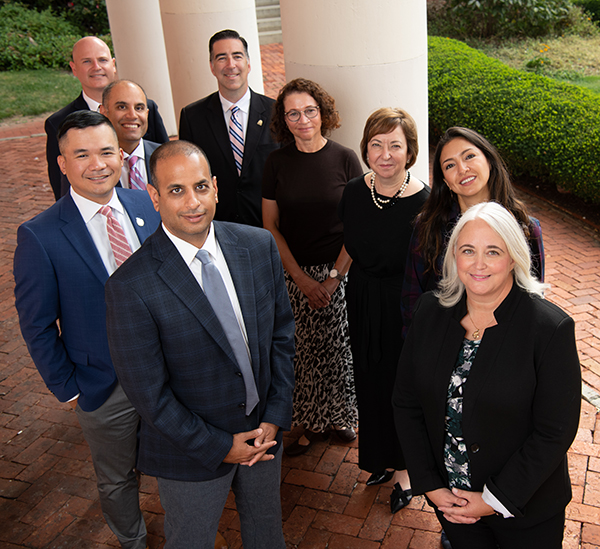
The School of Medicine team that revamped the school’s curriculum was honored as UMB’s Educators of the Year in 2021. Left column, from bottom: Devang Patel, MD; Norman Retener, MD; Nirav Shah, MD; Philip Dittmar, MD. Right column, from bottom, Constance Lacap, DO; Sandra Quezada, MD, MS; Olga Ioffe, MD; Donna Parker, MD, FACP; Joseph Martinez, MD. Not pictured: Kerri Thom, MD, MS. (Photo by Matthew D’Agostino). Read more about how the team transformed education at UMSOM.