


How the Civil War Changed Medicine and Shaped the University’s Future
When Americans remember the Civil War, they picture battlefields. Antietam. Gettysburg. Cold Harbor. They remember cannon fire, cavalry charges, and soldiers marching through smoke. But the war’s deadliest enemy was one few soldiers ever saw.
It lived in contaminated water, crowded camps, unsanitary hospitals, and infected wounds. Long before physicians understood bacteria or viruses, infectious diseases swept through military camps with astonishing speed. Dysentery, typhoid fever, pneumonia, tuberculosis, measles, malaria, and smallpox claimed far more lives than enemy bullets. Of the approximately 620,000 soldiers who died during the Civil War, an estimated two-thirds succumbed to disease rather than combat.
But the war that threatened to divide the nation also transformed American medicine. For the University of Maryland, Baltimore (UMB), that transformation became part of its identity.
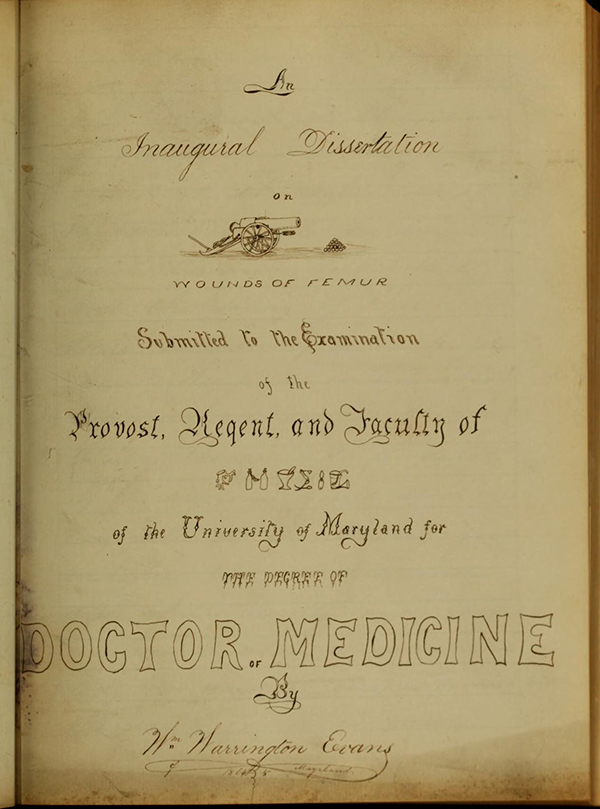
This is the title page of a thesis about femur injuries written by a University of Maryland medical student in 1865. Several theses written at the University during and after the Civil War related to diseases and injuries that were rampant during the war, showing the effect the conflict had on medicine and medical education in the United States.
Founded in 1807, the College of Medicine of Maryland, known today as the University of Maryland School of Medicine, had already spent more than half a century educating physicians by the time the first shots were fired at Fort Sumter. Baltimore quickly became one of the Union’s most important medical centers. Its strategic location between Washington and the northern states meant trains carrying wounded soldiers arrived almost daily. Hospitals expanded, temporary wards opened, and physicians were forced to confront injuries and illnesses on a scale the nation had never before experienced.
Medical schools suddenly became more than places of education. They also became laboratories for survival.
Faculty, alumni, and students from the University found themselves treating not only devastating battlefield injuries but also diseases that spread relentlessly through military camps. Surgeons could amputate shattered limbs, but there was often little they could do for a patient weakened by typhoid fever or overcome by dysentery. Entire hospital wards could fill with men suffering from illnesses that today are largely preventable.
The experience revealed an uncomfortable truth that medicine could not rely solely on treating disease after it appeared. Medicine also had to include an understanding of how diseases spread and, more importantly, how to prevent them.
That realization helped reshape American health care.
Laying the Foundation
Throughout the war, physicians became increasingly attentive to sanitation, clean water, ventilation, nutrition, and hospital organization. Although germ theory had not yet gained widespread acceptance in the United States, many clinicians observed that cleaner hospitals produced better outcomes. They began recording patient data more systematically, improving hospital administration, and developing new standards for nursing and medical care. The Civil War accelerated changes that eventually would lay the foundation for modern public health. The University of Maryland stood at the center of that evolution.
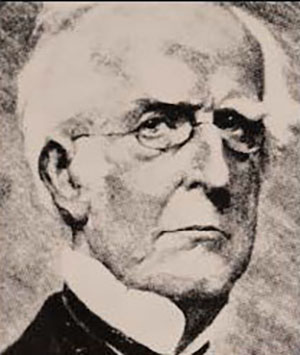
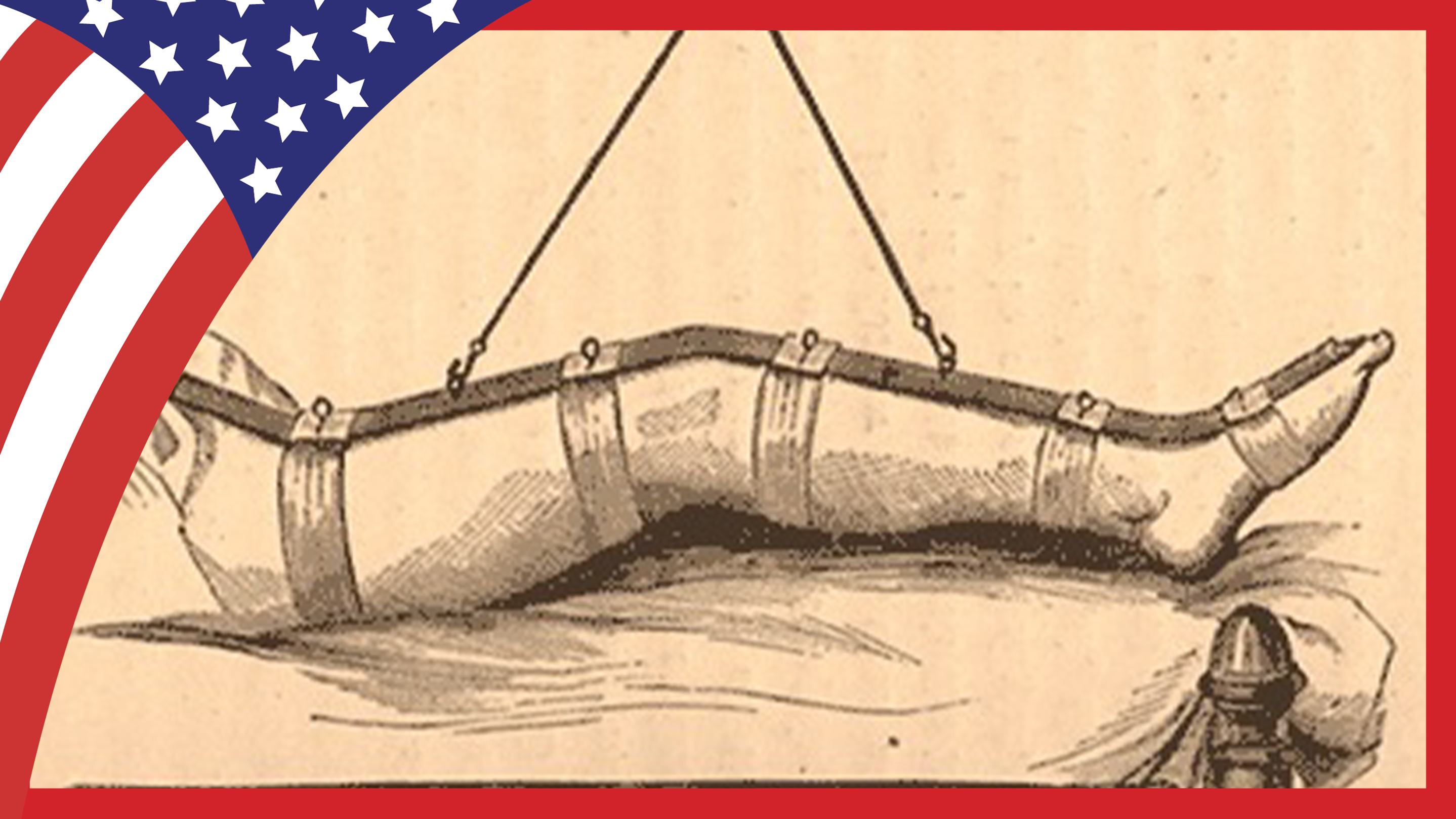
Nathan R. Smith, a University of Maryland School of Medicine professor and 50-year chair of the Department of Surgery, invented an anterior splint that was indispensable during the Civil War. The splint stabilized a soldier’s injured leg, allowing him to be moved with less pain and risk of further injury.
Its physicians returned to Baltimore carrying lessons learned under extraordinary circumstances. They had treated thousands of patients, managed overwhelming outbreaks of disease, and witnessed firsthand the devastating consequences of poor sanitation. Those experiences influenced how future generations of physicians were educated, emphasizing careful clinical observation, organized hospital care, and a growing appreciation for disease prevention.
The changes extended well beyond the war itself.
As the 19th century gave way to the 20th, scientific discoveries confirmed what Civil War physicians had only begun to suspect. Germ theory revolutionized medicine. Vaccination expanded. Laboratories became essential to diagnosing disease. Public health emerged as its own discipline, focused not only on caring for individuals but also on protecting entire communities from outbreaks.
The University continued to evolve alongside those advances.
In the decades that followed, UMB faculty would become leaders in infectious disease research, vaccine development, microbiology, epidemiology, and global health. From pioneering studies of childhood diarrheal diseases and vaccine research to confronting HIV/AIDS, emerging infections, antimicrobial resistance, and, most recently, COVID-19, the University’s scientists and clinicians have repeatedly faced the same challenge that confronted Civil War physicians: invisible enemies capable of changing the course of history.
The tools have changed dramatically.
Today’s physicians can identify pathogens in hours rather than weeks. Vaccines prevent diseases that once devastated entire communities. Antibiotics save lives that 19th-century doctors could only hope to preserve. Advanced laboratories can sequence a virus before it spreads around the globe. The central lesson remains remarkably familiar: Medicine is strongest when it anticipates disease rather than simply reacts to it.
Tragedy to Transformation
As America celebrates its 250th anniversary, the Civil War reminds us that some of the nation’s greatest medical advances were born not from triumph but from tragedy. The immense suffering of those years forced physicians to ask better questions, collect better evidence, and rethink nearly every aspect of patient care.
For UMB, those lessons became part of a larger tradition — one that stretches from crowded Civil War hospital wards to today’s research laboratories and clinics. The commitment to understanding infectious disease, improving public health, and protecting vulnerable populations did not begin with any single discovery. It grew over generations, shaped by physicians and scientists who were determined that future Americans would not endure the same losses.
The Civil War revealed the terrible cost of diseases that could not yet be controlled. The generations that followed, including those at UMB, devoted themselves to ensuring that history would not have to repeat itself.