


From Davidge Hall to the Frontiers of Discovery
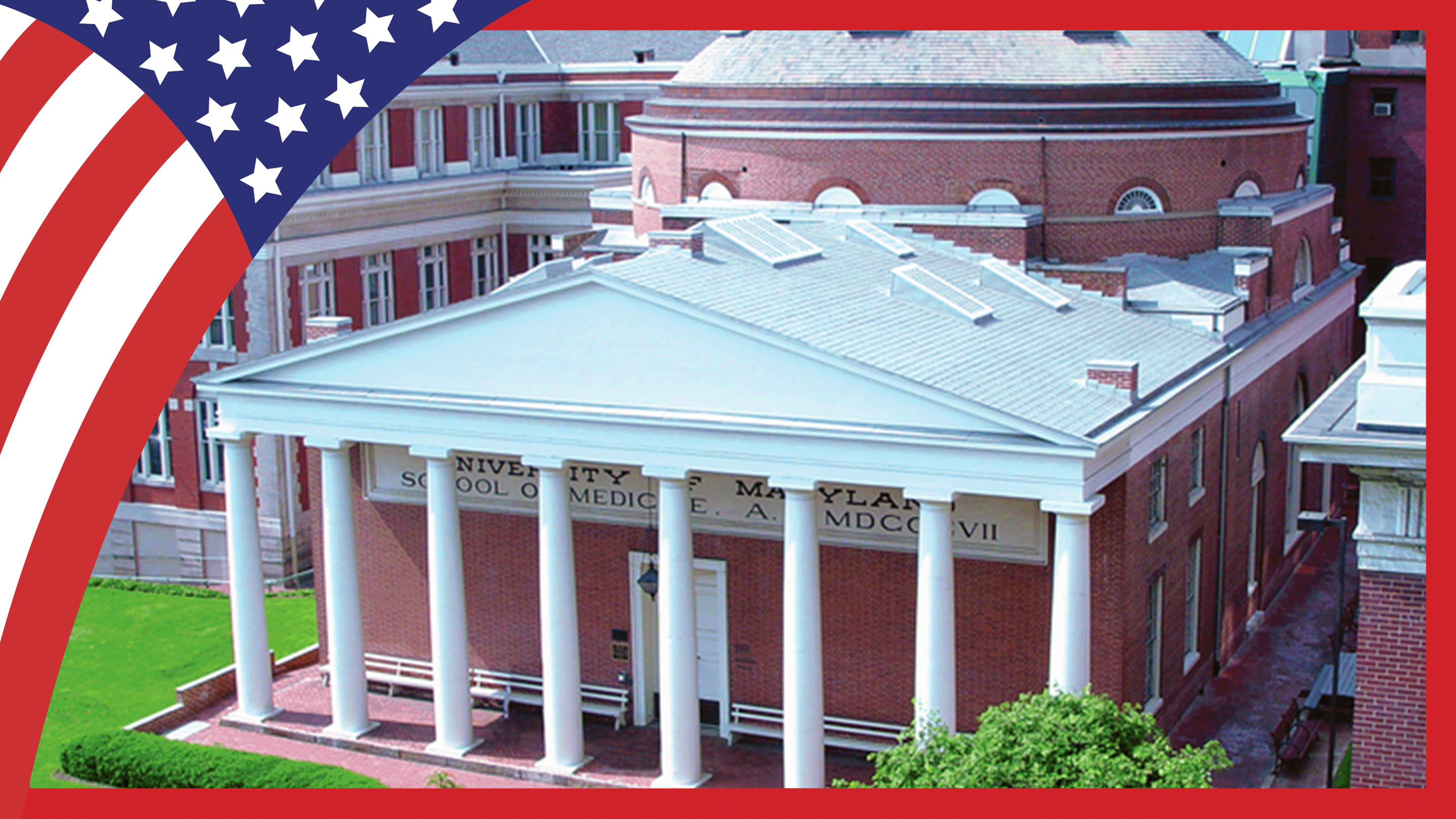
In 1812, five years after the University of Maryland, Baltimore (UMB) was founded, a remarkable building rose on the western edge of Baltimore: the home of the College of Medicine of Maryland.
Its founders could not have imagined gene editing, artificial intelligence, organ transplantation, precision medicine, or the ability to map the human genome. They had no concept of advanced imaging technologies, robotic surgery, or personalized cancer therapies. Yet they believed something revolutionary for their time: that medicine should be taught through science, observation, and hands-on learning.
More than two centuries later, that vision continues to shape the University of Maryland, Baltimore (UMB).
As America celebrates the 250th anniversary of the Declaration of Independence, few places better illustrate the nation’s journey of scientific progress than Davidge Hall, the founding building of UMB and one of the most important landmarks in the history of American medicine.
Constructed for the College of Medicine of Maryland (now the University of Maryland School of Medicine), Davidge Hall remains the oldest building in the Western Hemisphere continuously used for medical education. It is also the founding building of the University System of Maryland.
When Davidge Hall opened its doors, the United States was still a young nation. James Madison was president. The War of 1812 had just begun. Baltimore was emerging as one of America’s most important ports. Medicine was evolving from apprenticeship-based training into a formal scientific profession.
The building reflected that ambition.
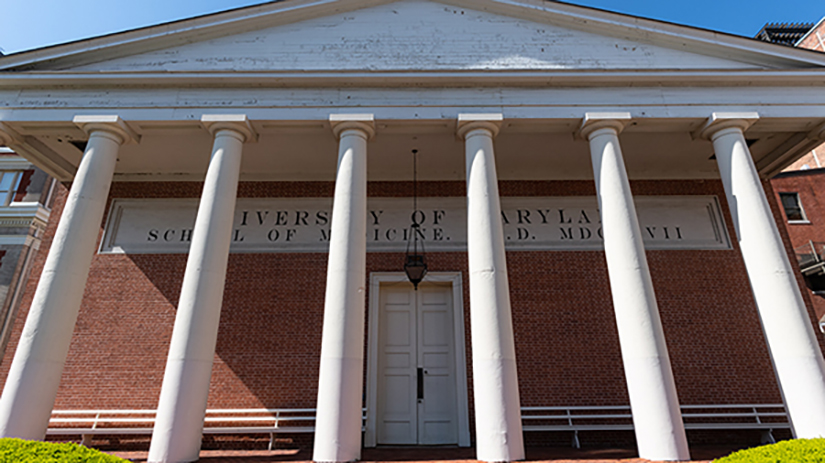 Davidge Hall is the oldest building in the Western Hemisphere continuously used for medical education and is listed on the National Register of Historic Buildings.
Designed with a domed anatomical theater and lecture halls modeled after leading European institutions, Davidge Hall provided students with something rare in early America: a dedicated facility for medical education grounded in science and discovery. Within its walls, generations of physicians studied anatomy, chemistry, pathology, and clinical medicine, helping to establish Baltimore as one of the nation’s leading centers of health sciences education.
Over the next two centuries, nearly every major advancement in modern medicine would unfold after Davidge Hall was built.
Anesthesia. Germ theory. Antibiotics. Vaccines. Medical imaging. Organ transplantation. Genomics.
And UMB would play a role in advancing many of them.
Something Old, Something New
Today, Davidge Hall stands not only as a historic landmark but also as a symbol of continuity. It reminds us that innovation does not emerge from nowhere. Every discovery rests upon the work of those who came before.
That spirit is visible across UMB’s campus, where state-of-the-art facilities now stand alongside one of America’s oldest medical education buildings.
Perhaps no building better represents that connection between past and future than Health Sciences Research Facility III (HSRF III). Officially dedicated in October 2018, the 439,000-square-foot facility is the largest building on UMB’s campus and one of the most advanced biomedical research facilities in Maryland. Designed to foster collaboration across disciplines, it provides laboratories, research cores, and gathering spaces where scientists work together to tackle some of the world’s most pressing health challenges.
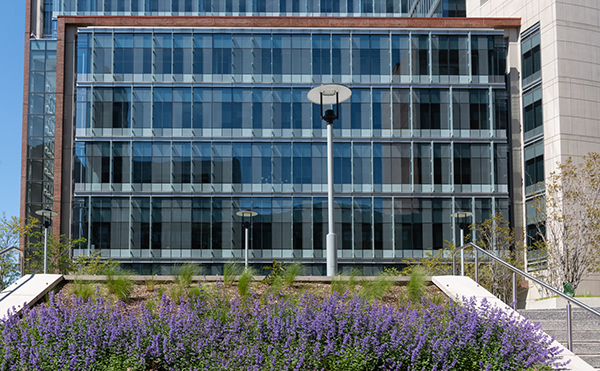
At 439,000 square feet, Health Sciences Research Facility III is the largest building on UMB’s campus.
Inside HSRF III, researchers investigate cancer, neuroscience, infectious diseases, cardiovascular disease, precision medicine, drug discovery, and emerging health threats. The facility was built to support hundreds of scientists and generate discoveries that improve health in Maryland and around the globe. Its flexible laboratories, collaborative spaces, and advanced technologies enable research that would have been unimaginable when Davidge Hall first opened its doors.
In Davidge Hall’s original anatomical theater, students learned through direct observation and lectures delivered from a central podium. Today, researchers at HSRF III analyze billions of genetic data points, use sophisticated imaging technologies to visualize disease at the molecular level, and collaborate across disciplines to develop therapies tailored to individual patients.
Changing Lives Around the Globe
The tools have changed. The mission has not.
That mission has produced discoveries that have transformed lives worldwide. UMB researchers developed aromatase inhibitors that revolutionized breast cancer treatment. University scientists and clinicians have advanced transplantation science, vaccine development, infectious disease research, trauma care, and precision medicine. Today, UMB continues to rank among the nation’s leading public research universities, generating hundreds of millions of dollars in sponsored research and scholarship annually.
The physical evolution from Davidge Hall to HSRF III and beyond mirrors a broader American story.
The United States has grown from a young republic with limited scientific infrastructure into a global leader in medicine, technology, and discovery. Universities such as UMB have helped drive that progress by educating generations of professionals, advancing research, and translating knowledge into public benefit.
Yet despite all the advances represented by modern research facilities, Davidge Hall remains an enduring presence at the heart of UMB’s campus. Its iconic dome still rises above Lombard Street. Its historic amphitheaters still welcome students and visitors.
As UMB looks toward the future, buildings like HSRF III demonstrate how far medicine has come. Davidge Hall reminds us of where it all began.
Together, they tell a uniquely American story — one of curiosity, innovation, and an unwavering belief that knowledge can improve the human condition.
For more than two centuries, UMB has carried that belief forward. As the nation marks its 250th anniversary, Davidge Hall, HSRF III, and dozens of other facilities stand as mile markers on a remarkable journey: from the earliest days of organized medical education in America to the cutting edge of scientific discovery.
And the next chapter is already being written.