


A Lasting Legacy of Legal Leadership
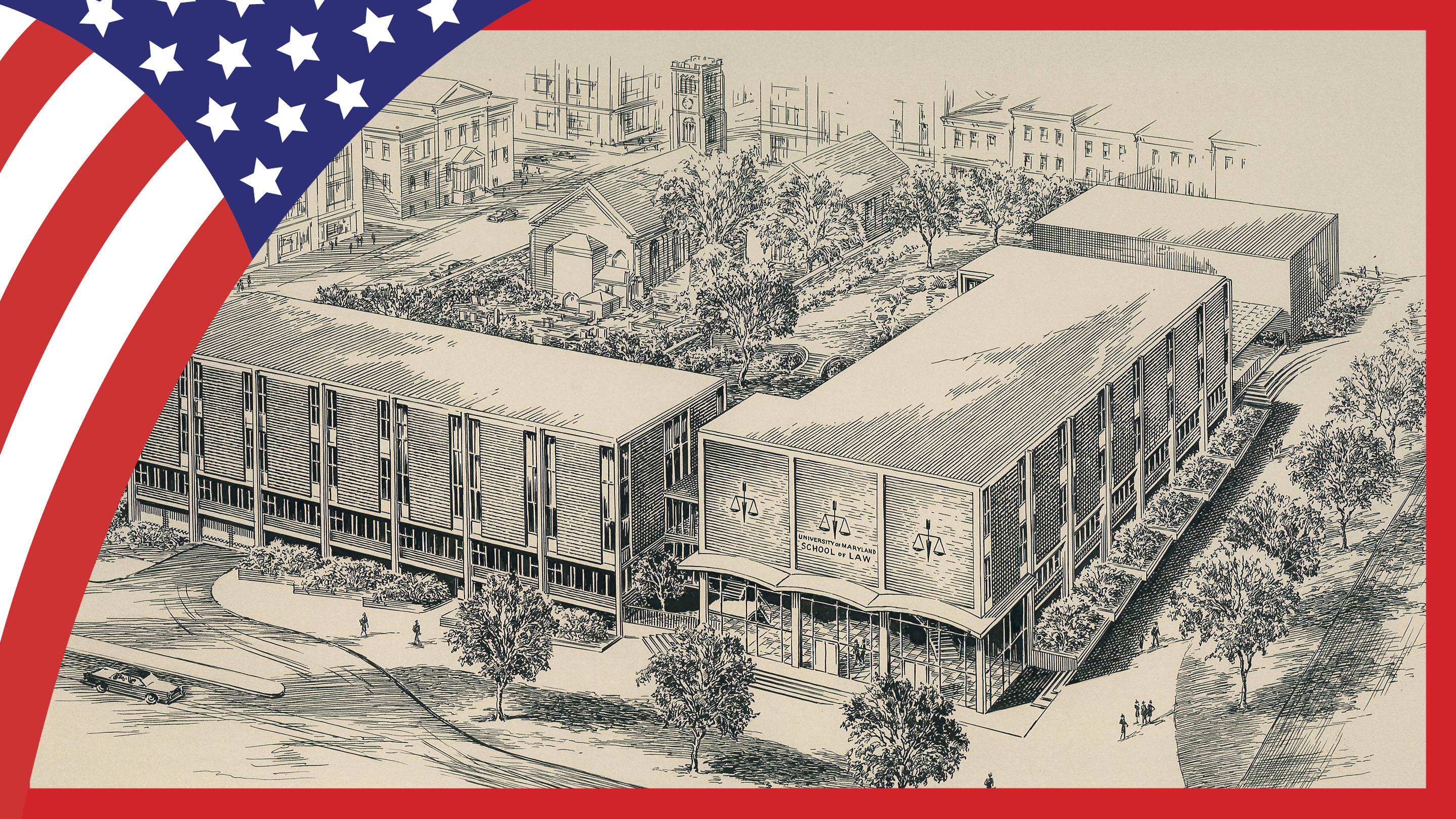
When the United States was still a young republic, the legal profession looked very different from what it does today.
Most aspiring lawyers learned through apprenticeships, reading law under practicing attorneys with little formal instruction or standardized curriculum. As the nation grew and its institutions became more complex, the need for more rigorous legal education became increasingly apparent.
The University of Maryland helped answer that need.
In 1814, the University appointed David Hoffman, one of Maryland’s most respected attorneys, as its first professor of law. Hoffman was a visionary educator who thought lawyers should receive a comprehensive, structured education rather than rely solely on apprenticeships. His innovative approach included one of the nation’s earliest organized law curricula and lecture series, helping establish a model that would influence legal education across the country.
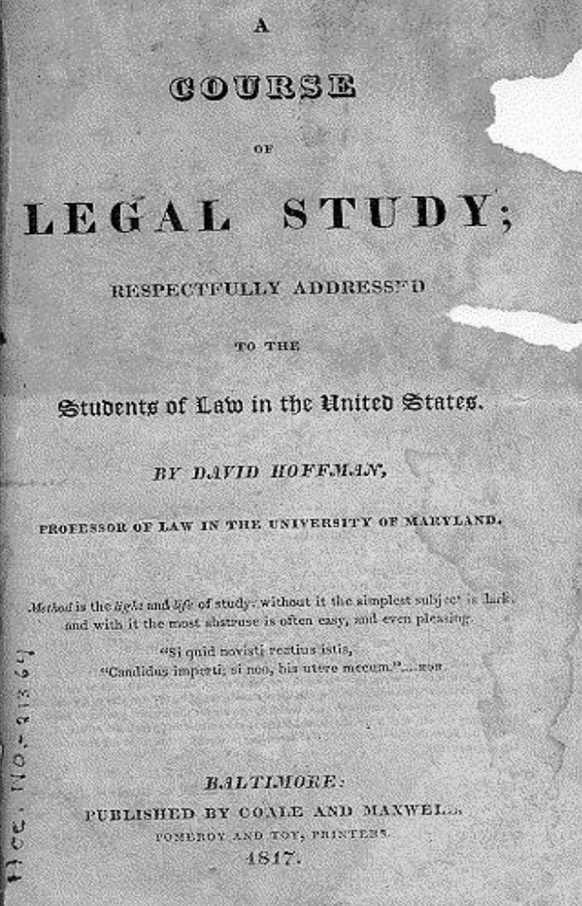
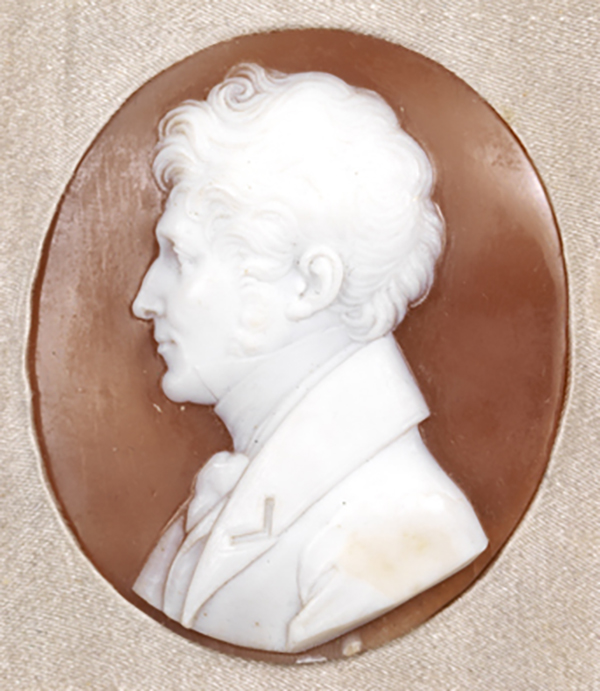
In 1817, David Hoffman (depicted in cameo) presented “A Course of Legal Study” to Baltimore publisher John Coale, and it became one of the most celebrated outlines of formal legal instruction in the United States at the time.
A decade later, in 1824, Hoffman became the founding dean of the Maryland Law Institute, which opened in downtown Baltimore and is now recognized as the fourth-oldest law school in the United States. Today, that institution is known as the University of Maryland Francis King Carey School of Law.
As America celebrates its 250th birthday this year, the history of Maryland Carey Law reflects the evolution of the nation itself. For more than 200 years, the school has educated generations of attorneys, judges, legislators, public servants, and civic leaders who have helped shape the laws and institutions that govern American society.
Fighting for Justice and Democracy
From the early years of the republic to the modern era, Maryland Carey Law graduates have played important roles in advancing justice and strengthening democratic institutions.
After a long period of segregation — the law school allowed Black men to enroll after the Civil War, but that practice ended in the 1890s — the school began admitting women in 1920. Finally, in 1936, Black people matriculated, thanks to the tenacity of then-civil rights lawyer Thurgood Marshall, who represented Donald Gaines Murray, JD ’38, in a successful challenge to Maryland’s practice of segregation in higher education.

Juanita Jackson Mitchell was one of the first Black women to graduate from the University of Maryland School of Law and the first Black woman to practice law in Maryland. She died in 1992 at the age of 79.
One of the first Black women graduates, Juanita Jackson Mitchell, JD ’50, became the first Black woman to practice law in Maryland. Graduates such as Murray and Mitchell were followed by generations of legal leaders, including late U.S. Rep. Elijah Cummings, JD ’76. Today, Maryland Carey Law is home to the Gibson-Banks Center for Race and the Law, whose mission is to re-imagine and transform institutions and systems of racial and intersectional inequality, marginalization, and oppression.
Over the past several decades, Maryland Carey Law has emerged as a national leader in areas where law intersects with some of society’s most pressing challenges, including civil rights, immigration, environmental justice, health care policy and public health, law and technology, and access to legal services.
Its nationally recognized clinical programs provide students with opportunities to work directly with individuals and families facing poverty, housing instability, violence, systemic injustice, and other complex challenges. Through this work, students learn firsthand how client-centered lawyering can move the needle toward justice for all.
Notably, Maryland Carey Law requires full-time day students to provide legal services to people who are poor or otherwise lack access to justice as a prerequisite to graduation. Named for former U.S. Sen. Ben Cardin ’67, the Cardin Requirement makes experiential education a key component of the law school’s curriculum.
Collaboration and Connections
The school’s influence extends far beyond the courtroom, and its impact is strengthened by its place within the University of Maryland, Baltimore, one of the nation’s few universities that brings together schools of law, medicine, nursing, pharmacy, social work, and dentistry on a single academic campus. This environment encourages collaboration across professions and reflects the increasingly interconnected challenges facing communities throughout the United States.
Maryland Carey Law faculty are thought leaders, advancing the law and informing policymakers, the judiciary, and institutions on some of the most significant law and policy issues of the modern area. Their scholarship and expertise have contributed to national conversations on constitutional law, the regulation of emerging technologies, criminal legal reform, bioethics, civil rights, environmental and health law policy, business and tax law, international law, cybersecurity and crisis management law, as well as consumer, family and employment law, and many other topics.
From Hoffman’s pioneering vision for legal education in the early 19th century to today’s innovative approaches to law, policy, and social justice, Maryland Carey Law has remained committed to preparing leaders who serve the public good.
Maryland Carey Law stands as a reminder that strong institutions help build strong democracies. For more than two centuries, the school has helped educate leaders in the law who protect rights, shape public policy, and strengthen communities across Maryland and the nation.
That legacy continues today — one generation of lawyers, advocates, and public servants at a time.
Read more about Maryland Carey Law’s history and 2024 bicentennial celebration.