

‘Breakthroughs Can’t Wait’: UMB Research Is Changing Lives Today
A patient with brain cancer needs treatment that can reach its target. A person living with chronic pain needs relief that does not bring risks. An older adult recovering from a hip fracture needs more than a repaired bone; they also need a safe way to get to the pharmacy and the grocery store. An infectious disease outbreak abroad needs to be identified and contained before it reaches the United States. These challenges are different, but the urgency behind each is the same — solutions are needed now to prevent harm, protect health, and save lives.
Researchers at the University of Maryland, Baltimore (UMB) are tackling these challenges by advancing new treatments, helping patients recover more fully, and developing solutions that respond to the evolving needs of patients and communities. Across UMB’s seven schools, their work is driven by a common question: How can research make life better for people now?
UMB’s “Breakthroughs Can’t Wait: Changing the Future Today” campaign brought the answers — and the researchers pursuing them — to public and professional audiences through short videos, extended question-and-answer features, and written stories. Launched in spring 2025, the campaign focused not simply on what researchers were studying, but also on the possibilities driving their work.
The campaign reached hundreds of thousands of viewers and drew readers into stories spanning disease treatment, recovery, and global health. Although the research varied widely, each story in the campaign demonstrated how UMB researchers are working to address challenges affecting patients and families in Baltimore and far beyond.
.jpg)
Showing that changing the future starts with research today, Dr. Luana Colloca (second from left) studies whether virtual reality can relieve chronic pain, potentially reducing reliance on opioids.
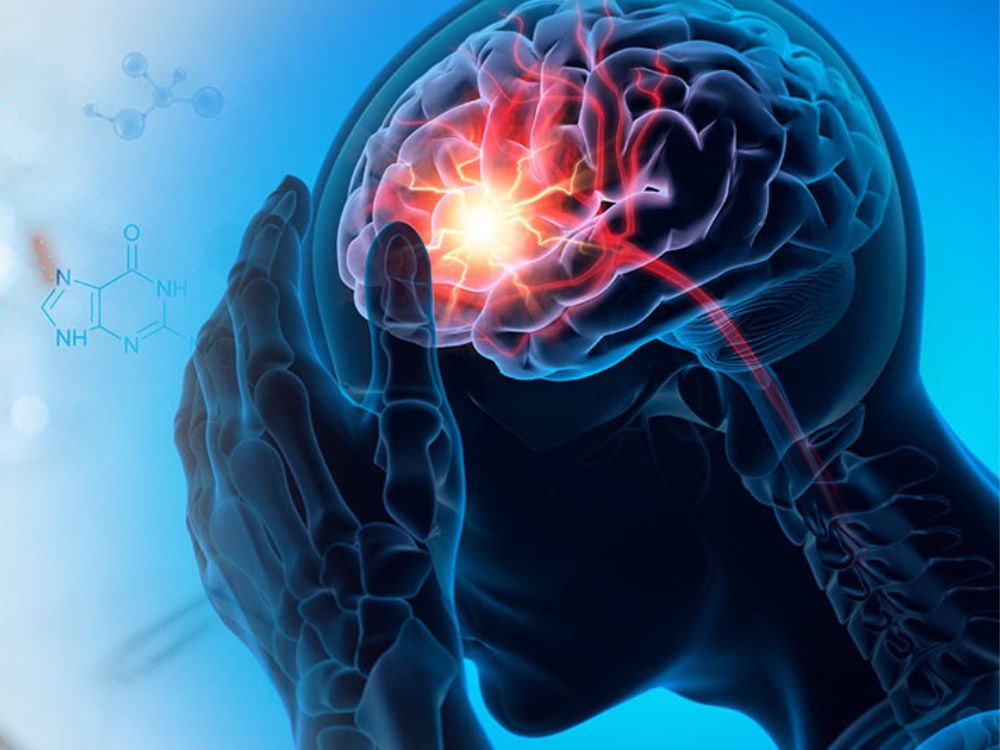
One story focused on glioblastoma, one of the most aggressive forms of brain cancer. For glioblastoma patients, the body’s own defenses can stand between them and potentially lifesaving treatment because the blood-brain barrier protects the brain while also blocking most chemotherapy drugs. Graeme F. Woodworth, MD, FAANS, FACS, of the University of Maryland School of Medicine (UMSOM), is exploring whether MRI-guided focused ultrasound can temporarily open that barrier, allowing chemotherapy and nanotherapeutic agents to reach the cancer more precisely. His National Institutes of Health-funded research offers hope against a disease for which patients typically survive only 12 to 18 months after diagnosis.
People living with chronic pain might someday find relief without reaching for a pill bottle. Luana Colloca, MD, PhD, MS, of the University of Maryland School of Nursing (UMSON), is investigating immersive virtual reality as a nonpharmacological treatment. By studying how virtual experiences affect the brain mechanisms that sustain pain, Dr. Colloca’s team is seeking approaches that could help patients cope while reducing reliance on opioids.
Older adults recovering from hip fractures could regain not only mobility, but also the independence and connections that give daily life meaning. UMSOM researcher Jason R. Falvey, DPT, PhD, studies how neighborhood conditions — from cracked sidewalks to limited transportation — affect recovery. His ENRICH program brings community health workers, rehabilitation professionals, and community partners into the process. Success is measured not simply by whether someone remains at home while recovering, but also by whether that person can maintain social connections and community life.
Communities abroad are building the expertise needed to identify and contain health threats before they cross borders. Veronica P.S. Njie-Carr, PhD, RN, ACNS-BC, FWACN, another UMSON researcher, is working with partners in The Gambia to train health professionals and scholars in research ethics and methodology. Supported by the National Institutes of Health’s Fogarty International Center, the effort is building the local expertise needed to confront infectious diseases and other urgent health challenges. By helping countries detect outbreaks and respond before they spread, this work could provide an essential line of defense for communities in the United States.
While these examples reflect the breadth of UMB research, their significance is found in the outcomes: treatments reaching patients, older adults remaining active in their communities, and health systems becoming better prepared. They also show why sustained public investment, collaboration, and trust are essential to moving discoveries from promising ideas to meaningful change.
In Baltimore, the impact extends beyond the individuals directly served. Healthier residents and older adults who can remain active and connected contribute to more resilient neighborhoods and a stronger local economy. UMB research also creates opportunities for businesses, nonprofits, health systems, and government agencies to combine their expertise, develop new solutions, and address challenges no single organization can solve alone.
“Breakthroughs Can’t Wait” gave audiences a window into research rooted in human needs and public purpose. From strengthening Baltimore’s communities and institutions to improving health around the world, UMB researchers are not simply imagining a better future. They also are working with partners to build that future today — for the people, communities, and businesses that cannot afford to wait.