


Rhea Roper Nedd , PhD, MA
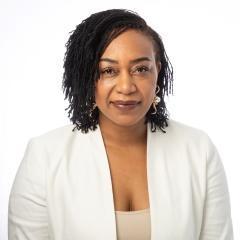
Assistant Vice President
Phone: 410-706-0615
Email: rnedd@umaryland.edu
Rhea Roper Nedd has more than 15 years of experience leading inclusive excellence, strategic planning, assessment, and institutional effectiveness initiatives in higher education. In her current role as Assistant Vice President for Inclusive Excellence and Institutional Effectiveness at the University of Maryland, Baltimore (UMB), she serves as an institutional leader, resource, and thought partner in advancing organizational priorities through data-informed strategies, accountability frameworks, and programs designed to strengthen student, faculty, and staff retention and success.
Roper Nedd’s work centers on aligning institutional goals, planning processes, and assessment practices with initiatives that improve organizational performance and support measurable outcomes. She collaborates with academic and administrative units, and campus partners to identify institutional trends, develop practical strategies, and implement initiatives that foster excellence, belonging, leadership development, and long-term institutional effectiveness.
In this capacity, she provides leadership for university-wide initiatives that integrate inclusive excellence and institutional effectiveness into planning, policy development, program design, training, and assessment. Her responsibilities include advising on strategic direction, supporting accountability structures, developing capacity-building initiatives, representing the Office on institutional committees and workgroups, and contributing to high-impact projects that advance UMB’s mission, core values, and strategic priorities.
Before joining UMB, Roper Nedd served the students, faculty and staff of Towson University, as the Director for the Center for Student Diversity, the campus center focused on student success, engagement, and institutional programming. She oversaw program development, assessment, and short- and long-term goal setting aligned with institutional strategic priorities. Her work included building collaborative partnerships, strengthening campus engagement, and using assessment findings to improve programs and services.
Roper Nedd also served students, faculty, and staff at the University of Maryland, College Park for more than 10 years. In leadership roles within the College of Undergraduate Studies, the Academic Achievement Programs office, and the Pre-college Programs office, she managed academic program operations, developed curricula and workshops, coordinated faculty-mentor initiatives, and used intake assessments, participation data, and performance trends to design programs that supported student persistence, academic progress, and preparation for doctoral programs of study.
Throughout her career, Roper Nedd has developed, assessed, and implemented strategic plans and institutional initiatives for academic and administrative units as well as nonprofit organizations. Her expertise in organizational development, data-informed decision-making, program assessment, and sustainable practices supports institutional goals that result in measurable impact and improvement.
Roper Nedd earned a PhD from Howard University in political science with research focused on educational development and public-private partnerships as a development strategy. She also earned a Master of Arts from the Catholic University of America and a Bachelor of Arts from the University of Maryland, College Park. Her research and teaching focus on equitable educational development opportunities for people and communities in the United States and in re-developing countries, reflecting her broader commitment to institutional effectiveness through evidence-informed learning, access, engagement, and student success. She has served as an adjunct faculty member, developed courses, and taught at the University of Maryland, College Park, Towson University, and Howard University, and has led several education abroad programs to Ghana, West Africa, creating experiential learning opportunities that strengthened students’ global awareness, applied learning, and understanding of education as a tool for sustainable development.