


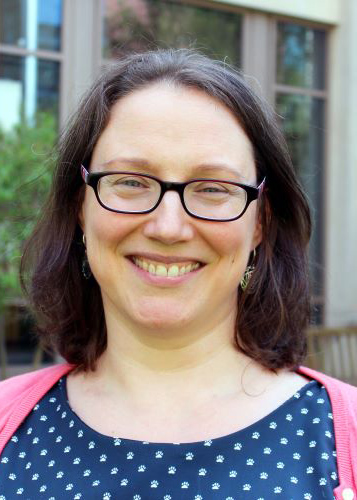
Isabell C. May, PhD
Titles
Associate Professor
Program Director, Science Communication Certificate Program
Director, Writing Center
School Affiliation
School of Graduate Studies
Specialties
Science Communication
Academic & Scientific Writing
Generative AI Pedagogy
About
Phone: 410-706-4450
Email: imay@umaryland.edu
Isabell Cserno May, PhD, is a scholar and educator specializing in science communication and storytelling, with a focus on how narrative, writing, and emerging technologies shape learning, equity, and public engagement in healthcare and the sciences. Her work centers on preparing health professionals, researchers, and students to translate complex scientific knowledge into clear, ethical, and engaging stories that resonate with diverse audiences. As the director of the UMB Writing Center, Dr. May advances a strategic, reflective approach to writing instruction that foregrounds access, critical thinking, and learner agency, supporting students and faculty across the university’s seven schools in strengthening communication as central to professional practice and equity in healthcare education. Her work emphasizes writing as a core professional practice, one that supports critical thinking, reflection, and accessible communication in clinical, research, and community settings. Her approach foregrounds accessibility, audience awareness, and rhetorical decision-making as essential components of healthcare education. Dr. May also teaches in and directs UMB’s Science Communication Certificate Program, where learners develop storytelling strategies to communicate research through public-facing writing, plain-language summaries, multimedia projects, and advocacy-oriented narratives. This work expands the communication skillset health professionals need to be effective not only as scientists and clinicians, but as educators, collaborators, and trusted voices in society. A key area of Dr. May’s current scholarship and teaching explores the role of generative artificial intelligence (GenAI) in writing and communication practices. Her research examines how GenAI tools are reshaping authorship, storytelling, pedagogy, and ethical decision-making in academic and professional contexts, particularly within health and science education. This includes studying how educators and students can engage GenAI critically and responsibly while maintaining transparency, equity, and human judgment in communication.
For interview requests, please contact the Office of Communications and Public Affairs.
Tagged: The Future of Health Care Research and Innovation Strategic Engagement, Institutional Access & Well-Being