

Social Work Research: The Support Gap for Young Cancer Patients
For teenagers and young adults diagnosed with cancer, the hardest part isn’t always the treatment.
It’s everything around it.
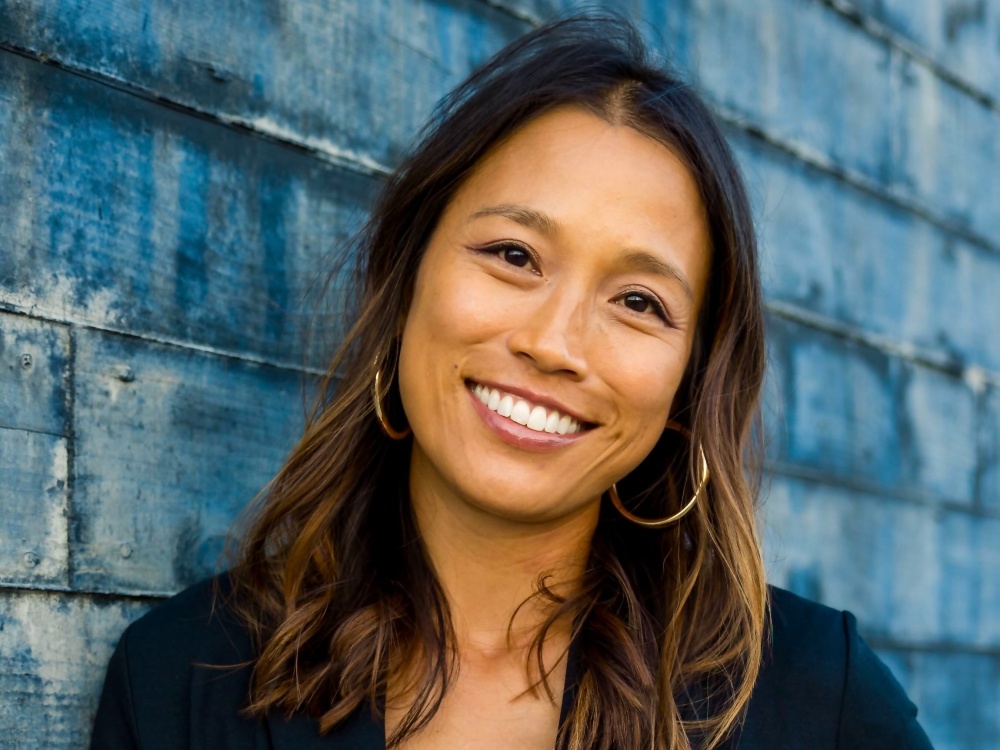
UMSSW associate professor Christabel K. Cheung, PhD, MSW
“Some people, cancer is like a project for a few months that they have, right? Depending on the severity of their disease. Other people, it completely ruins their lives,” said Christabel K. Cheung, PhD, MSW, an associate professor at the University of Maryland School of Social Work. “They get divorced. They lose their job. They go into financial debt.”
Cheung knows the struggles a young cancer patient faces. She is a two-time Hodgkin lymphoma survivor and bone marrow transplant recipient. Her experience navigating cancer as a young adult now drives her research — and a new project aimed at fixing what she sees as a fundamental gap in care.
Her latest grant, “Right Care, Right Time: Improving Psychosocial Referrals for Teens and Young Adults with Cancer,” focuses on a problem hiding in plain sight: Many young cancer patients never get connected to the support services they need. The study was awarded a Teen Cancer America Community Adolescent and Young Adult (AYA) Project grant, which focuses on patients ages 15 to 39.
The lack of support connections isn’t happening because teens don’t want help, but because the system isn’t built to get it to them consistently.
Cheung’s new project will use a national Delphi study — a structured consensus-building process — with oncology providers in community clinics, where most young patients receive care.
The goal is to define practical, low-burden ways to integrate psychosocial referrals into routine cancer care.
Depending on ‘Heroic Labor’
Cheung’s earlier research found that AYA cancer survivors have low engagement with psychosocial care because health care providers aren’t sure who should start the conversation to connect these survivors to services such as mental health support, financial counseling, and housing assistance.
“I think nobody knows whose responsibility it is,” said Cheung, who also is a member of the University of Maryland Marlene and Stewart Greenebaum Comprehensive Cancer Center. “And people have a very narrow idea of what social workers do, who could do a lot of this work.”
In practice, that means support often depends on what Cheung calls “heroic labor” — an individual provider going above and beyond to connect a patient with resources.
“But it shouldn’t depend on whether someone has the time or the energy that day,” she said. “That creates an uneven system.”
That reality is something Emily Weidow, MPP, sees every day as an AYA patient navigator with the Ulman Foundation and the University of Maryland Medical Center (UMMC). Weidow works directly with providers across the region, often stepping in to connect patients to resources that might otherwise be missed.
“A lot of it is relationship-based,” she said. “Providers know to reach out, or we identify patients who could benefit. But it’s not always built into the system.”
One Population, Very Different Realities
The challenges facing patients ages 15 to 39 are anything but uniform.
A teenager navigating school and family life faces a different reality than someone in their late 20s balancing work, relationships, and financial independence, or a new parent in their 30s managing child care during treatment.
“You’re talking about people at completely different life stages,” Weidow said. “The needs are not one-size-fits-all.”
That can include everything from fertility concerns and dating to job loss, insurance gaps, and long-term financial strain — issues that don’t always surface during clinical visits.
Cheung’s research on financial hardship reinforces that point. Cancer-related financial toxicity can affect everything from treatment decisions to mental health and long-term outcomes. Patients might take on extra jobs, delay care, or quietly absorb the impact without ever identifying it as “hardship.”
And even when screening tools exist, they’re not consistently used.
Why Timing Matters
For young patients, timing is everything.
“They might come in for treatment — and then we never see them again,” Cheung said. “That’s the reality.”
That drop-off is especially common during transitions, such as moving from active treatment to survivorship. It’s also when support needs often spike — financially, emotionally, and socially.
Weidow sees that gap play out in real time. Even if someone has a patient navigator, the information presented to someone diagnosed can be overwhelming. It’s why Weidow thinks these connections need to happen before an official diagnosis.
“It can be a lot to take in in that first meeting, when you’re just trying to understand your diagnosis, and someone’s also talking about preserving your fertility,” Weidow said.
“Then you maybe have to come back to have that emotional support conversation a second time, just to make sure that it didn’t get lost.”
That’s where Cheung’s research and Weidow’s work converge: Support needs to be proactive, not reactive.
“Right care, right time means we’re not reacting to a crisis,” Cheung said. “We’re getting ahead of it.”
Building a System That Works
Cheung’s project will attempt to identify key moments to screen for needs, clarifying provider roles, and creating referral pathways that work across settings.
The end result will be a toolkit designed for real-world use, and not just academic cancer centers, but community practices across the country.
“How do we make this something everyone can do?” Cheung said. “That’s the question.”
For Weidow, that kind of system would make a difference.
“I think every provider wants to make sure that there's a holistic level of care for their patients,” she said.
Through the Ulman Foundation and UMMC, those supports already exist, from navigation services, support groups, and even housing during treatment, to help patients manage the non-medical realities of cancer.
The challenge is making sure every patient gets connected to them.
Changing the Experience of Cancer Care
For Cheung, the work is about more than improving systems. It’s about changing outcomes and expectations.
This generation of young cancer survivors is living longer thanks to advances in treatment. But many are also dealing with long-term consequences, from financial strain to chronic health issues.
“We’ve made incredible progress medically,” she said. “Now we need to catch up on everything else.”