

Carnegie Classifications Affirm Community Engagement, Research as Core to UMB’s Mission
When the University of Maryland, Baltimore (UMB) earned the Carnegie Elective Classification for Community Engagement this year, the recognition marked more than a new national designation. For many across the University, it also confirmed something they already believed: that working in partnership with communities is not a peripheral activity at UMB — it is fundamental to how the institution fulfills its mission.
Administered by the American Council on Education in partnership with the Carnegie Foundation for the Advancement of Teaching, the classification recognizes colleges and universities that demonstrate deep, sustained, and reciprocal partnerships with their communities. Out of thousands of higher education institutions nationwide, only a few hundred hold the designation, just 100 institutions are both community-engaged campuses and top-tier research universities with R1 research activity classification. (Learn more about UMB's classifications on the University's Carnegie Classifications webpage.)
For UMB, the designation provides external validation of a commitment that has long shaped the University’s work in Baltimore and beyond.
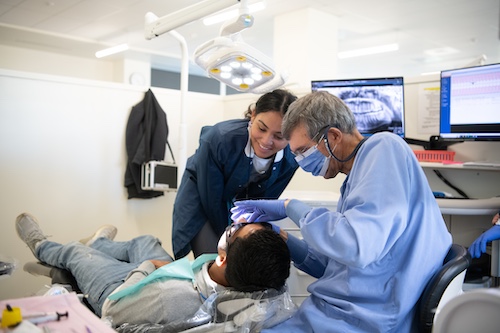
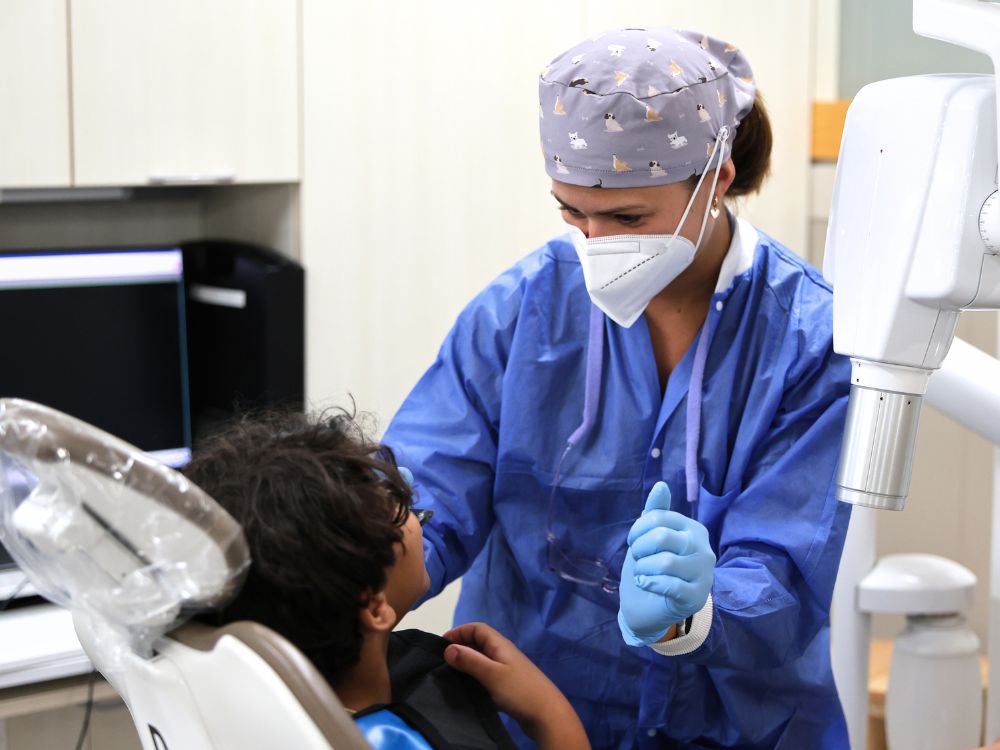
Volunteers from the School of Dentistry provide care at the Baltimore Mission of Mercy clinic, a partnership with the United Way of Central Maryland that offers free dental services to underserved patients. Efforts like this helped the University of Maryland, Baltimore earn the Carnegie Community Engagement Classification.
“This recognition affirms the kind of partnerships our faculty, staff, students, and community collaborators have been building for many years,” said Bill Joyner, JD, MSW, assistant vice president for community engagement and partnerships, who leads the UMB Office of Community and Civic Engagement (OCCE). “It shows that those efforts are not isolated projects. They are part of how the University operates and serves the public.”
Why the Carnegie Classification Matters
The Carnegie Community Engagement Classification is unique among higher education designations. Unlike rankings that rely primarily on metrics such as enrollment or research funding, the classification is awarded through a rigorous application process in which institutions must demonstrate how community engagement is embedded across teaching, research, service, and institutional operations.
For universities, the designation signals to funders, policymakers, and research collaborators that community partnerships are a meaningful part of the institution’s work. For faculty, staff, and students, it highlights how those partnerships strengthen research, education, and professional training — demonstrating that community engagement is not simply outreach but also a core part of how universities conduct research and prepare future professionals.
At UMB, one example of that work is the coordination of community-engaged health initiatives that bring together researchers, clinicians, students, and community organizations across the University’s seven schools.
As associate vice president for community health, Esa Davis, MD, MPH, helps lead those efforts, connecting faculty expertise with community partners and clinical systems such as the University of Maryland Medical Center to address issues including chronic disease, health disparities, and access to care.
Davis said the University’s approach centers on long-term partnerships with community organizations, including nonprofits, faith-based institutions, and neighborhood leaders. Rather than imposing solutions, the goal is to work alongside communities to identify priorities and develop responses together, an approach that requires trust, transparency, and sustained engagement over time.
“What makes UMB’s approach distinctive is that we don’t just talk about community engagement, we show it through sustained partnerships,” Davis said. “We work with community leaders, nonprofits, and faith-based organizations to understand what communities need and how we can address those challenges together. That kind of partnership takes time to build, and the Carnegie designation recognizes that commitment.”
A University Built for Community Engagement
UMB’s structure as Maryland’s only public university dedicated to health, law, and human services places it in constant interaction with communities. Through clinical care, legal assistance, research partnerships, and service-learning opportunities, students and faculty work directly with individuals and organizations across Baltimore and the state.
That connection is especially visible in West Baltimore, where UMB collaborates with community partners to address issues ranging from health disparities and economic development to education and public safety.
For the University’s students and trainees, these partnerships provide opportunities to apply classroom learning while working alongside communities facing real-world challenges.
Few people have witnessed the evolution of this work as closely as Brian Sturdivant, MSW. More than two decades ago, Sturdivant became the first employee hired in UMB’s central administration specifically to focus on community engagement, a role that helped shape many of the partnerships and initiatives that exist today.
“Because of the kind of institution we are, our work naturally intersects with communities,” said Sturdivant, who is director of strategic initiatives and community partnerships, OCCE. “Our faculty and students are working alongside communities every day.”
The Carnegie classification highlights how those activities are coordinated across the University. UMB maintains a network of programs and infrastructure that support community engagement, including OCCE, the Interprofessional Program for Academic Community Engagement, and the Institute for Clinical and Translational Research.
Together, these efforts help connect community partnerships with academic teaching and research, an approach the Carnegie review process specifically evaluates.
Strengthening Research Through Community Partnerships
Community engagement at UMB also plays a central role in research, particularly in areas focused on health equity and population health.
Laundette Jones, PhD, MPH, associate professor and co-director of the Program in Health Equity and Population Health at the University of Maryland School of Medicine, works with faculty, students, and community partners to address disparities in health outcomes across Baltimore and beyond. Her work often involves community-engaged and participatory research approaches that bring residents and organizations into the research process from the beginning.
“When we think about addressing health disparities, we cannot do that effectively without engaging communities,” Jones said. “Community members bring lived experience and insight that help shape better research questions and better solutions.”
That approach, often described as community-based participatory research, emphasizes collaboration between researchers and community partners throughout the research process.
“Instead of research being done on communities, it becomes research done with communities,” Jones emphasized.
These partnerships also impact how students learn, giving them firsthand experience working with communities and understanding the broader factors that influence health and well-being.
“These experiences don’t just build skills, they shape how students learn to show up in relationship with communities, with humility and awareness of the broader conditions that influence health,” Jones said.
In this way, community engagement strengthens not only the University’s research enterprise but also its role in preparing future health, law, and social work professionals to serve the public.
A Milestone Built on Years of Work
While the Carnegie designation recognizes UMB’s current achievements, it also reflects years of effort to strengthen and coordinate community engagement across the University.
UMB first applied for the classification in 2020 but did not receive it, an experience that helped University leaders identify areas where the institution needed to better document and integrate its community-based work.
For Sturdivant, the outcome was less a setback than a turning point.
“The work was already happening,” he said. “But the classification requires institutions to show that community engagement is part of their systems and structures — it’s not just individual projects.”
In response, UMB began strengthening how community-engaged work is documented and coordinated across the University, ensuring partnerships across schools and programs could be tracked and evaluated.
One strength highlighted in UMB’s Carnegie application was the University’s ability to measure community engagement across schools and programs.
Through tools such as the Collaboratory database, UMB collects information about partnerships, projects, and outcomes across the institution. The data helps the University understand the scope of its work, connect partners across schools, and demonstrate impact.
“It allows us to see a bigger picture,” Joyner said. “We can better understand where partnerships are happening, where there are opportunities to connect people, and how the University is contributing to community priorities.”
Tracking that work is essential for the Carnegie classification, which requires institutions to demonstrate not only that partnerships exist but also that they are coordinated, sustained, and mutually beneficial.
The successful application ultimately demonstrated how community engagement has become embedded across the University’s teaching, research, and partnerships. University leaders say the designation also provides a foundation for strengthening and expanding those partnerships in the years ahead.
“This recognition reflects progress, but it’s really just the beginning,” Jones said. “Now the question is how we build on it. The designation gives us an opportunity to strengthen that collective commitment and make sure we remain accountable and relevant to the communities we partner with.”