

University of Maryland School of Social Work Financial Social Work Initiative Shares Five Tips to Manage Financial Stress
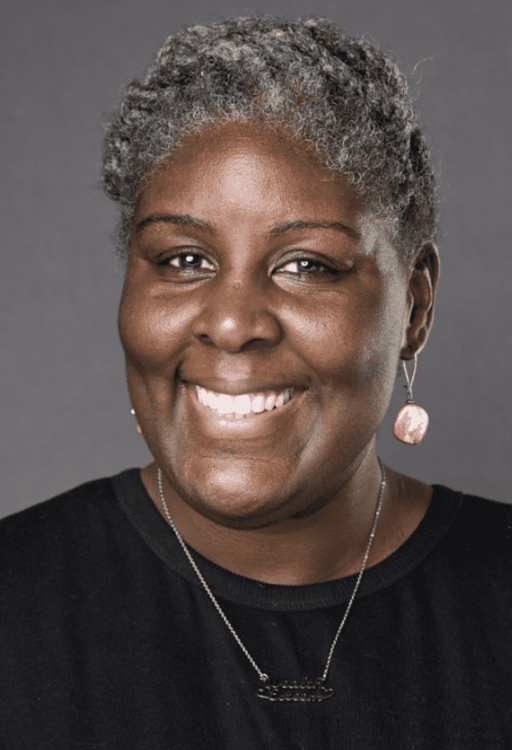
Seante Hatcher
BALTIMORE, Md. — Job markets are showing signs of stress both nationwide and here in Maryland creating conditions that make financial worry feel personal and immediate, especially for federal workers facing another possible government shutdown.
Most layoffs and work stoppages can catch employees by surprise, and to better prepare folks who might find themselves without a job, University of Maryland School of Social Work (UMSSW) Assistant Dean of Continuing Education Seantè Hatcher, MSW, LCSW-C, prepared five tips to help stabilize their lives and offer encouragement.
“As we prepare for this impending federal shutdown and possible layoffs, anxiety is high,” Hatcher said. “But remember: You’ve done hard things before, and you are more than capable of getting through this.”
Hatcher chairs UMSSW’s Financial Social Work Initiative (FSWI) where graduate social work students are trained on how to help clients navigate financial challenges. FSWI serves as a national model for integrating financial capability into social work education and practice.
Social workers and allied professionals can also earn a Financial Social Work Certificate through the school to solidify their training.
“Financial stress is not a sign of personal failure. It’s evidence that the system works exactly as intended: to keep labor cheap and people compliant,” Hatcher said. “Recognizing this can help shift focus from ‘What am I doing wrong?’ to ‘What can we build together that serves us better’ ?”
Below are five practical tips to help weather this storm:
- Don’t Hide: You might feel the urge to pull back and suffer in silence, but this is the moment to reach out. Contact creditors and service providers early to request hardship plans. Ask if you can move payments to the back of your loan (car loans, mortgages, utility forgiveness programs, etc.).
- Mutual Aid: Yes, everyone might be experiencing hardship, but collectively, you can ease the burden. This might look like food and resource sharing, child care swaps, or even small revenue-generating ideas together.
- Resilience Starts with Perception: Is there a talent or skill you possess that can help generate money? This is the time to focus on what you can do, not on what you lost.
- Revisit Subscriptions and “Auto-Life”: This is not a “cut all of your wants” tip — you will need some type of reprieve. However, review what’s automatically leaving your account that you no longer use. Eliminating just a few quiet, forgotten expenses can create breathing room without drastically changing daily life. You also might want to pause automatic payments until you have steady revenue again.
- Track Your Energy, Not Just Your Money: Stress drains your decision-making power. Notice when you’re overwhelmed and take a break before making financial choices. A regulated moment often leads to clearer, more empowered decisions.
Hatcher adds that above all, keep your head up and do not be shy to ask for assistance.
“Your dignity matters more than your pride,” Hatcher said. “If you need help, local food banks and community programs exist for exactly this moment.”
###
NOTE TO EDITORS/REPORTERS: Seantè Hatcher is available for interviews. Please contact Charles Schelle at 443-717-2591 or cschelle@umaryland.edu.
About the University of Maryland School of Social Work
The University of Maryland School of Social Work (UMSSW) is one of six University of Maryland, Baltimore professional schools and an interdisciplinary School of Graduate Studies dedicated to improving the human condition and serving the public good of Maryland and beyond. Nationally recognized by U.S. News and World Report, UMSSW is one of the largest and most respected schools of social work in the country. UMSSW educates the majority of social workers in Maryland with over 80 full-time faculty members and a strong focus on social justice principles. In addition to the school’s academic side, UMSSW excels in translating research to practice through partnerships with state and local government agencies and organizations. The school’s Center for Restorative Change, Family Connections , and Institute for Innovation and Implementation are all very active in helping with the social work needs in Baltimore and beyond.
About the University of Maryland, Baltimore
The University of Maryland, Baltimore (UMB) was founded in 1807 as the Maryland College of Medicine, which now stands as the nation’s oldest public medical school. In response to growing social and cultural needs, UMB’s mission has evolved and grown tremendously. Widely recognized as a preeminent institution, UMB serves as the academic health, law, and social work university of the University System of Maryland and is guided by a mission to improve the human condition and serve the public good through education, research, clinical care, and service.
UMB is a thriving academic health center combining cutting-edge biomedical research, exceptional patient care, and nationally ranked academic programs. With extramural funding totaling $636 million in Fiscal Year 2025, each tenured/tenure-track faculty member generates an average of $1.46 million in research grants per year. Our 3,108 faculty members conduct leading-edge research and develop solutions and technologies that impact human health locally and around the world. World-class facilities and cores, as well as interprofessional centers and institutes, allow faculty to investigate pressing questions in a highly collaborative fashion. As a result, the more than 6,800 students, postdocs, and trainees directly benefit from working and learning alongside leading experts as they push the boundaries of their fields. For a listing of UMB’s organized research centers and institutes, visit umaryland.edu/research/umb-research-profile/research-centers-and-institutions.