


When people think of sustainability, recycling is often what first comes to mind. However, of the 3 Rs (reduction, reuse, and recycling), recycling should be a last resort, with reduction and reuse prioritized where possible. See the Environmental Protection Agency (EPA) Waste Management Hierarchy below to learn more about materials management. 
 
EPA Waste Hierarchy
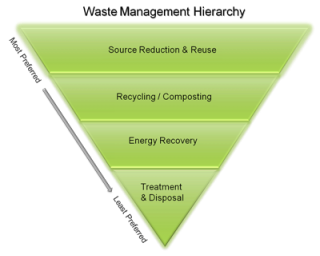
Waste Management Hierarchy | Source Reduction & Reuse | Recycling/Composting | Energy Recovery | Treatment & Disposal

Frequently Asked Questions

Put in a work order through the UMB Facilities Work Request Portal to get a recycling bin for your space. 

Check out the website for the Baltimore City Department of Public Works to learn about what is accepted in the city’s curbside recycling program.

Paper Bins

  • Newspapers
  • Magazines and Catalogs
  • Junk Mail
  • Cardboard and Paperboard Boxes
  • Corrugated Boxes
  • Computer Printouts
  • Books (including paperbacks, textbooks, and hardbacks)
  • Office Paper
  • Envelopes
  • Brown Paper Bags
  • Telephone Books
  • Non-Metallic Wrapping Paper
  • Milk and Juice Cartons

Nonpaper Bins

  • Plastics (#1-7)
  • Glass (all colors)
  • Aluminum
  • Steel Containers

You can download a PDF of UMB’s recycling signage.

  • Cellphones
  • Ink Cartridges
  • Batteries

Stay tuned for information on where you can drop off your food scraps to be composted at UMB!

  • Donate clothes and home furnishings through Goodwill or Second Chance.
  • For all other miscellaneous items (plastic bags, bicycles, tools, appliances, etc.) visit Earth 911.

To comply with applicable federal and state regulations, every hazardous waste container must be tagged or labeled properly using the Hazardous Waste Labels furnished by Environmental Health and Safety (EHS) the instant that the material inside the container is determined to be a waste. For more information, please visit the EHS website