

|
|
CHHS Building Bridges Across Borders |
Speaking as an expert on emergency management halfway around the
world, Eric Oddo, senior
policy analyst at the University of Maryland Center for Health and Homeland Security (CHHS),
joined policymakers and practitioners in August for a three-day "Best
International Practices in Building Resilient Cities" workshop in
Bangalore, India.
The opportunity for CHHS
to collaborate with both Indian and international experts to share
insights, real-time experience, tools and methodologies came, however,
from another part of the globe -- Israel.
In late April 2013, CHHS Founder and Director Michael Greenberger, JD, professor at
the UM Francis King
Carey School of Law, traveled to Israel with University of Maryland, Baltimore President
Jay A. Perman, MD. The
trip, coordinated by the Maryland/Israel Development Center, was a
business and research development mission for Maryland Governor Martin
O'Malley. Greenberger took the opportunity to meet face to
face with Aaron Richman, co-director of the Institute of Terrorism
Research and Response (ITRR) -- a security-focused think tank and
consulting firm with offices in Philadelphia, Washington, D.C., and
Jerusalem.
Greenberger immediately saw possibilities for collaboration between the
Center and the Institute. He brought Richman to campus following
the Israel trip to learn more about CHHS experience and expertise, and
jumped on the chance to kick-start a partnership when Richman asked if
any staff was available to fill a presentation gap at the Resilient
Cities workshop.
The workshop was organized by the government of Karnataka in
partnership with the Synergia Foundation, a strategic group that works
with the public and private sector in the domains of geopolitics,
geo-economics, and geo-security. Bringing together participants
for a deeper exchange of current practices and to identify possible
gaps in order to build resilient operating procedures in India, the
workshop sought to sensitize key stakeholders including bureaucracy,
the media, and civil society about the need to have a proactive
approach to mass casualty event planning.
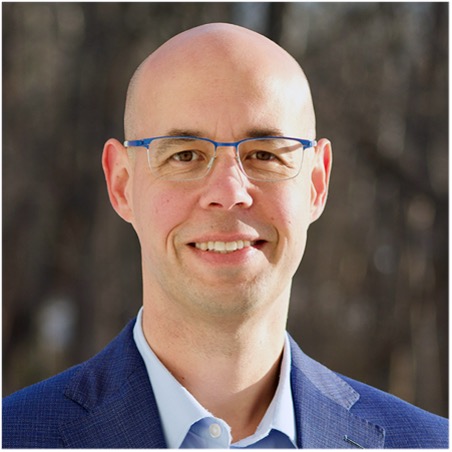
Oddo, shown in the photo above, presented on Continuity
of Operations Planning (COOP), as well as the use of the
Incident Command System and Community Emergency Response Teams.
These are areas that CHHS routinely studies, evaluates, and develops
policies/procedures around for clients.
"For most in attendance, the proactive COOP approach to planning for the
aftermath of a natural or man-made disaster, as well as the use of the
structured Incident Command System to identify roles during an
emergency, were new," said Oddo. "All were receptive to the
ideas, and expressed their interest in using the concepts in
conjunction with other best practices learned at the workshop."
Participants discussed how they would activate their emergency response
plans in response to a hypothetical event at the end of the workshop
through a comprehensive tabletop exercise. The scenario featured an
Iiprovised explosive device being detonated in the parking garage of a
hospital.
Developing new partnerships, opportunities for academic excellence, and
avenues for business growth in Maryland were all goals of both the
University and Governor O'Malley through the Israeli trade mission.
O'Malley is a UMB alum who graduated from the School of Law in 1988.
Greenberger and CHHS continue to work with many connections made during
the trip to meet those goals, while expanding the center's expertise
worldwide.
|
| Posting Date: 08/16/2013 |
| Contact Name: Danielle Lueking |
| Contact Phone: 410-706-3985 |
| Contact Email: dlueking@law.umaryland.edu |
|