

|
|
Health Care Students Team Up, Excel in 2013 Interprofessional Patient Management Competition |
When pharmacy student Katie Heavner offered her opinions on the right
drugs to give a 48-year-old obese male patient with acute syphilis,
failing vision, hypertension, a knee fracture, possible meningitis, and
possible clinical depression, everyone on the seven-member health care
team stopped talking and listened.
Heavner had not yet had any clinical experience.
"But I did have the knowledge," she said. After three years of
education at the University of Maryland (UM) School of Pharmacy,
Heavner performed well as the pharmacy representative on her team
competing in the University's 2013 Interprofessional Patient Management
Competition (IPMC), to develop a prognosis and treatment plan for the
hypothetical male patient.
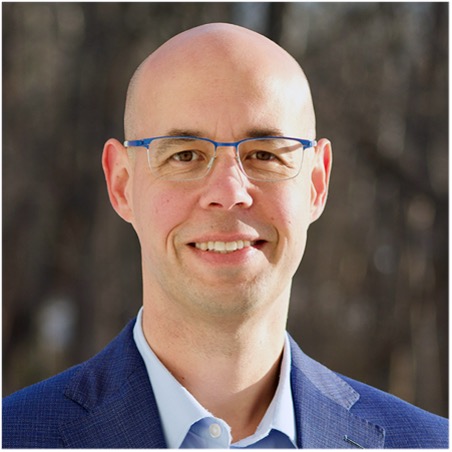
When he became president of the University of Maryland, Baltimore (UMB)
in July 2010, Jay A. Perman, MD,
placed a high priority on interprofessional clinical education among
the six professional schools. In 2011, he established an
Interprofessional Education Task Force charged with creating or
broadening existing opportunities for interdisciplinary education,
which in turn has led to a permanent Center for Interprofessional
Education in the President's Office at UMB.
The IPMC is a campuswide student competition. The team-based analysis
of clinical situations helps UM students learn collaboration with
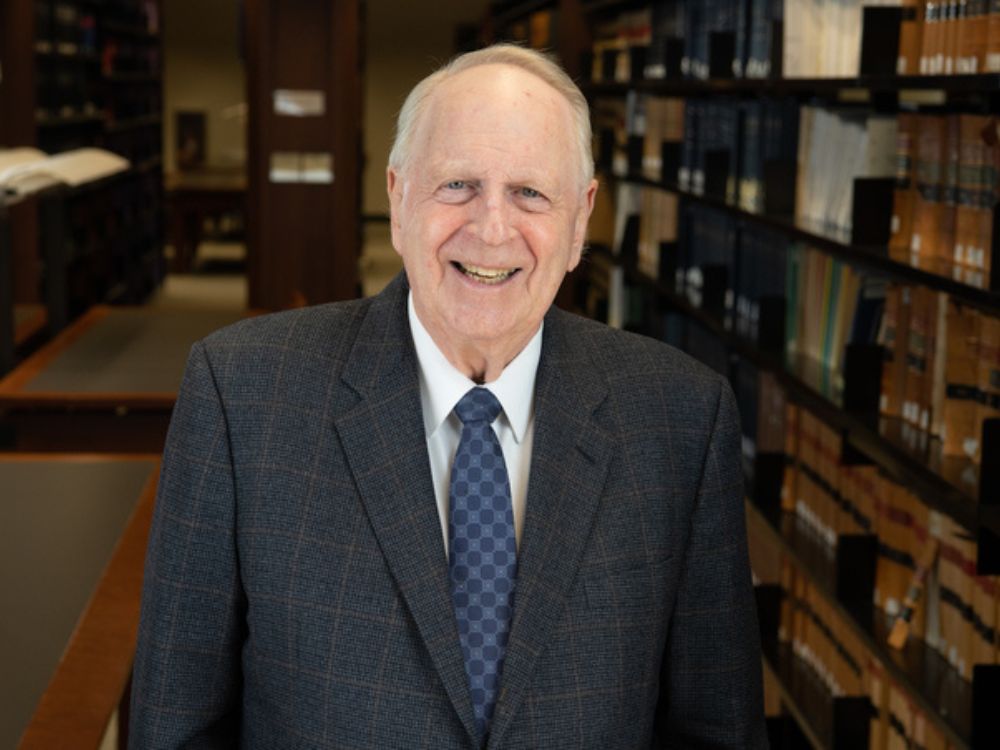
different health care disciplines. Faculty advisor James Trovato, PharmD, MBA, BCOP, FASHP,
associate professor at the UM School of Pharmacy, says the competition
builds many skills, which the students will need as professionals to
bridge disciplines in team health care.
For the first time, teams in the IPMC this year each had at least one
student from each of the UM professional schools in
Baltimore--dentistry, law, medicine, nursing, pharmacy, and social
work, plus the School of Medicine's Department of Physical Therapy and
Rehabilitation Science. A panel of faculty advisors, who also
represented all the schools, judged the teams on technical and
communications skills.
As one of 42 students in the competition, Heavner got a head start on
the traditional fourth year of clinical work at the School of Pharmacy.
She is convinced that health care is moving toward interprofessional
teamwork "because we are learning it in School right now. It was
interesting to see the different roles interact. And, it was very
exciting to be asked my opinion as a pharmacist from people of other
disciplines," she says.
UM School of Social Work third-year student Laurie Chaikind agrees with
Heavner, her teammate. "This is where health care is going. And at the
same time we are learning to make the [health care] system better."
Their 'Team 4' placed a very close second.
All six teams took on the same case, that of the 48-year-old man. He
was characterized with multiple sexual partners and a history of
recurrent sexually transmitted diseases. He had had multiple courses of
antibiotics but never tested for HIV. His rationale for entering the
hospital was decreased vision sensitivity. He was unsteady and uneasy.
He smoked a pack of cigarettes and had three to four alcoholic drinks a
day. He refused to be tested for HIV at the hospital.
The following are just a few of the students' interprofessional
responses to the case, with emphasis on comments from the winning 'Team
2.' That team put a "high priority on legal issues along with medical,"
Francis King Carey School of Law student Ian Clark, Class of 2014, told
the panel of judges. The team considered whether the patient's current
live-in partner or his mother or sister would be best to hold power of
attorney. Would he be competent to choose? they asked. Another
immediate legal issue was that the hospital tested him for HIV without
his consent. He tested positive.
(pictured right to left above from Team 2, Michael Leung, Adrienne Kilby, Ian Clark, and Stephanie Schmitz.)
Clark said, "HIV is medical-social work-legal and more. Also, the
physician is required to inform both and patient and his partners." The
team needed to know if the patient would sue the hypothetical hospital.
School of Medicine Team 2 member Stephanie Schmitz, Class of 2013, says
her team immediately wrote down and triaged the many conditions of the
patient, and then agreed on a treatment plan for the syphilis first, in
consultation with a pharmacist. Tingling in the patient's extremities
indicated neuro--or advanced--syphilis. Michael Leung, Class of 2014,
School of Pharmacy, raised caution over reference to a possible
allergic reaction to penicillin in the patient's medical records. Leung
on Team 2 and student pharmacists on other teams recommended a
progressive infusion of penicillin "to first desensitize a possible
reaction."
Jennifer Drossner, Class of 2014, School of Dentistry, recommended a CT
scan immediately to check for deep neck infections that could be
life-threatening. The patient had not seen a dentist in 10 years.
Dental students on several teams emphasized that the oral cavity is an
indicator of systemic health. One of the students said, "We could have
nipped some problems in the bud" if the patient had been seen with
earlier signs of lesions or xerostomia, or dry mouth.
Nurses are perhaps the most important members of an interprofessional
health care team, says Perman, because they are with the patient for
the duration of a hospital stay. Lara Arnett, School of Nursing, Class
of 2014, on Team 2, floated possibilities for post-hospital home nurse
visits. A nursing student on another team was impressed that the
patient "presented" to the hospital within a day after experiencing
vision problems, "even though he had long-term STD issues." The patient
was diagnosed with depression in 2008, prompting another team's nursing
student to stress the importance of deciding early on possible
antidepressants. She asked, "Would depression set in based on the
positive HIV test results?"
School of Social Work student Adrienne Kilby, Class of 2013, asked her
Team 2 colleagues, "How can we monitor his depression?" She also made
it clear that, despite being employed, the patient's main problem,
beyond medical care, was financial and that he was uninsured for
getting care after discharge. The quickest way to get him health
insurance might be through community organizations, suggested a law
student member.
Physical therapy (PT) student Laura Arnett, School of Medicine Class of
2014, said that after the patient's neuro-syphilis becomes manageable,
he should begin gait training to become mobile again. Although without
health insurance, he would not likely quality for post-discharge PT,
she said. Another nursing student asked her team, "How will we get him
to understand that being unable to walk two blocks impacts his life?"
The IPMC was sponsored by the University Student Government Association
(USGA), School of Pharmacy SGA, Phi Lambda Sigma, and the Student
Society of Health-System Pharmacy (SSHP). It is organized by the SSHP
at the School of Pharmacy and facilitated by the group's president
Nirvana Maharaj, of the UM School of Pharmacy, Class of 2014.
The judges were Jacquelyn Fried, RDH,
MS, director of the Dental Hygiene Division of the School of
Dentistry; Virginia Rowthorn, JD,
coordinator for the Law & Health Care Program of the Carey School
of Law; Jacob Blumenthal, MD,
assistant professor, School of Medicine; Brock Beamer, MD, assistant
professor, School of Medicine; Conrad
Gordon MS, RN, ACNP, assistant professor, School of Nursing;
Trovato; Linda Horn, program
coordinator
for the Program in Toxicology in the UM Graduate Program in
Life Sciences; and Melissa Bellin,
PhD, MSW, associate professor, School of Social Work.
In the fall of 2010, President Perman, a pediatric gastroenterologist,
set the interprofessional education tone by making each Tuesday's
Pediatric Gastroenterology Clinic at the University of Maryland Medical
Center on campus an interdisciplinary clinical classroom. Revolving
faculty and students from all the schools meet patients, with parents
or guardians, to plan together. The experience then influences the
training and education of UM students.
|
| Posting Date: 04/18/2013 |
| Contact Name: Steve Berberich |
| Contact Phone: 410-706-0023 |
| Contact Email: sberb001@umaryland.edu |
|