

|
|
UM School of Pharmacy Hosts Successful Korean/FDA Workshop |
Getting more and better drugs to market for patients was the ultimate
goal of the University of Maryland School of Pharmacy's
(SOP) first Korean/U.S. workshop on drug regulation and marketing from
March 18 to 22.
In the meantime, each participating group--pharmaceutical company
executives, faculty, students, and food and drug regulators from both
countries--said they benefited greatly from the unique opportunity of
the workshop, which was largely made possible by a new Korea-U.S.
Free Trade Agreement reached a year ago.
Visiting executives from six South Korean companies--each with a top-10
share of the pharmaceutical market in that country--and several leading
professors from that country, became more familiar with the U.S. drug
regulatory system and approval processes, plus key elements of the
workings of clinical trials in this country, through the workshop.
They attended 13 lectures by SOP professors on topics ranging from U.S.
medication regulatory laws to clinical trial design in this country.
And they heard lectures from three U.S. Food and Drug Administration
(FDA) officials, two University of Maryland School of Medicine
professors, and executives of two U.S. companies.
The SOP faculty--those presenting and others in attendance--got their own
firsthand 'course' on the South Korean pharmaceutical industry by
fielding questions and comments from the visitors in session and
socially.
Natalie D. Eddington, PhD, FAAPS, FCP,
dean and professor of the School of Pharmacy, said, "We are really
excited about the opportunities and the partnership possibilities. I
hope that every spring we will bring a contingent from South Korea so
this becomes an annual conference."
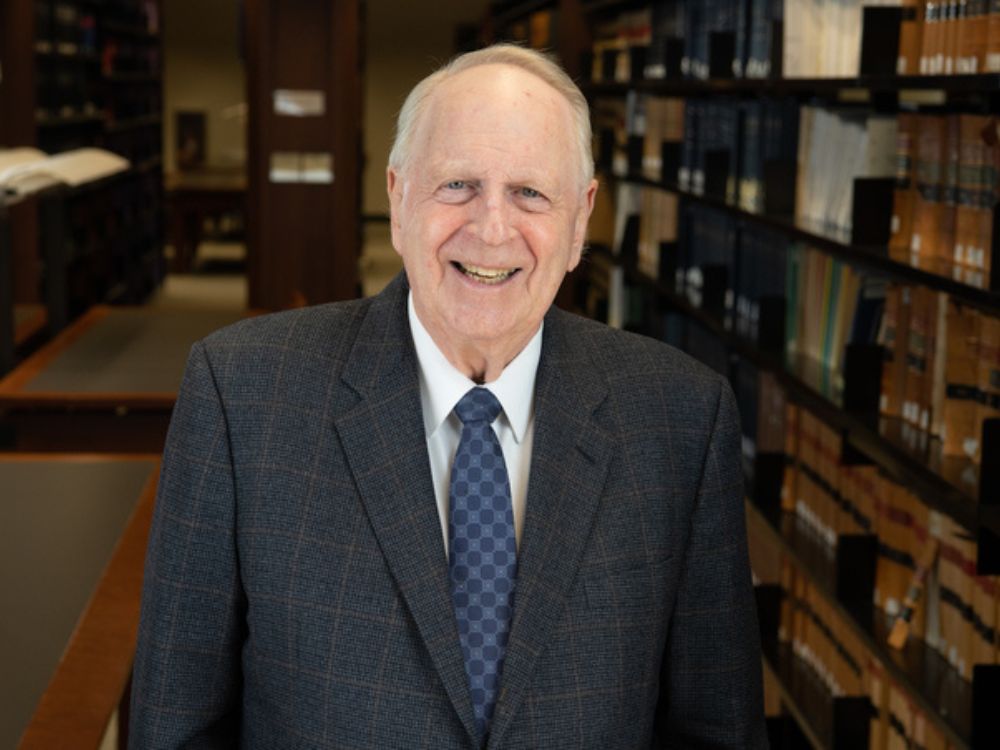
Wonro Lee, (pictured with Eddington) executive director of the State of Maryland Business Office
for South Korea located at the JG Business Link International in
Gaithersburg, Md., said, "The workshop was like a course in U.S.
regulatory processes with topics that matched well with the diversity
of expertise represented by the Koreans' interests."
The workshop was scheduled during the School's spring break. Yet, 10
South Korean and Korean-American students--many fluent in the Korean
language--took opportunities throughout the week to converse with South
Korean company executives, thus enhancing their future career options.
Third-year SOP student Hae Jin Cho
said "though I had learned the workshop contents in class through my
pharmacy education, the Korean delegation visit has provided me an
opportunity to learn the similarities and differences of the U.S. and
the Korean FDA regulations and their drug development processes."
Regulatory comparisons were also a keen interest of South Korean
businesswoman Bo-Ram Lee of the department of clinical operations
management at Celltrion Inc. Three months ago, the company marketed in
South Korea a biosimilar version of the Johnson & Johnson
medication Remicade, which is indicated for rheumatoid arthritis. Lee
and company colleague Kyungmin Park said they are planning to apply to
the FDA to start the process for marketing the biologic product in this
country.
Lee said, "The lectures were very informative and beneficial,
especially from the FDA officials." She appreciated the direct
communication with FDA officials and her interaction with Frank
Palumbo, PhD, JD, executive director of the SOP's Center on Drugs and
Public Policy, and with other faculty, "considering the more complex
development process necessary for a generic biologic medication than
for [marketing] a pill composed of a molecular compound," she said.
Wonro Lee commented that because Bo-Ram Lee's Celltrion is one of the
leading edge companies in South Korea in the biologics field, "Other
[South Korean] companies are waiting with bated breath to see how they do
[with the FDA]. They have had more international experience in
biologics than most in Korea."
Fourth-year SOP student from Korea, Seojin
Yang, who volunteered as a special liaison to communicate
announcements and other information in the Korean language, said she
had been excited to see Dean Eddington's email request for student
volunteers. "Wow, I can do something for my country, too," said Yang.
"It is good to know the regulatory information in both Korea and the
U.S. When there is a drug to market in Korea, it will help [U.S. drug
makers] to know the Korean system and for the Koreans it will help them
to know the FDA regulation process to market in the U.S."
Her central role in the workshop may have changed Yang's career plans
also, she said. She has applied for a pharmacy residency after earning
her PharmD degree in May. However, she said, "Now, because of the
workshop and particularly from Dr. Polli's influence [workshop lecturer
James Polli, PhD, an SOP
professor] about regulatory science, I may want to go into that area."
The South Korean delegation included employees of Green Cross Corp.,
Dong-A Pharm Co. Ltd., Daewoong Pharmaceutical Co. Ltd, GL Pharm. Tech.
Corp., Celltrion Inc., HanAll BioPharma Co. Ltd.; three professors from
South Korea's Chonbuk National University Medical School; and a
physician from the Kyungpook National University Hospital Clinical
Trial Center.
Professor Soo-Wan Chae, MD, PhD, of Chonbuk University attended the
workshop with a strong interest in locating "a presence" for his
university at the University of
Maryland BioPark. Chonbuk University officials visited the BioPark
last year and again last month, meeting with Jane Shaab, UM assistant vice
president for economic development.
Chae said, "We plan to enter the Park after ironing out some legal and
financial regulations. We will also bring employees and will want to
work with the School of Pharmacy students. Being at the BioPark will
support our business relations, and the students will help in
translating and liaison with the School."
Mohamed Al-Ibrahim, MB, ChB, FACP, president and chief medical officer
for SNBL Clinical Pharmacology Center at the BioPark, met with several
of the companies. "The Koreans benefited with a look at the drug
development process in the United States for two reasons," he said.
"First, we are still the biggest market in the world for
pharmaceuticals. Second, a number of Korean pharmaceutical companies
now have a footprint in this country." There are seven South
Korean-owned pharm or biopharma companies in Maryland, according to
Bradley Gillenwater, Asia regional manager at the Maryland Department
of Business and Economic Development.
Al-Ibrahim said that the visitors took an interest in SNBL's clinical
trial capabilities. "They are also interested in exchange of drugs;
there are a number of U.S. companies, CROs [contract research
organizations], that are in South Korea doing early-stage clinical
trials." Al-Ibrahim said the SNBL business development group is
reviewing collaborative possibilities raised by the South Korean
delegation visit.
"This effort was just great. I take my hat off to the School for the
conference," he said.
|
| Posting Date: 04/03/2013 |
| Contact Name: Steve Berberich |
| Contact Phone: 410706-0023 |
| Contact Email: sberb001@umaryland.edu |
|