

|
|
PCORI Chief Says Patient-Centered Health Care Decisions Becoming More Prevalent |
"If I've learned one thing at PCORI, it's that there are a lot of
motivated patients out there," executive director Joe V. Selby, MD,
MPH, of the Patient-Centered Outcomes Research Institute said at the
University of Maryland School
of Pharmacy on March 29.
Selby delivered the School's annual Paul A. Pumpian Memorial Lecture,
"An Evolving Understanding of Patient Participation in Clinical
Research." He emphasized that, "We live in an era when the patient is
elevated."
PCORI was established by the federal Affordable Care Act of 2010 as a
non-governmental, nonprofit organization. According to Selby, it was
long overdue. The institute's goal is to help patients, their
caregivers, and clinicians make better-informed health care decisions.
Selby explained that the institute operates by funding research that
will potentially help give patients a better understanding of the
prevention, treatment, and care options available, and the science that
supports those options.
The institute is rooted in comparative effectiveness, a research
approach that came into vogue around 2009 and "addresses very practical
questions," said Selby. Comparative effectiveness means research that
considers a full range of outcomes, considering, for example, how
possible differences in treatments occur in patient subgroups such as
genders, races, and ages.
"This has not been a big part of research until PCORI," said Selby.
"But still, research planning needs patient-centered outcome studies.
If PCORI generates better evidence, we have a chance to get to better
decisions and [health care] cost-cutting. Where you provide good
evidence you get better outcomes, and sharing evidence with patients
empowers them."
PCORI has approved 25 funding contracts nationwide, totaling $40.7
million aimed at supporting patient-centered comparative clinical
effectiveness research projects. One of the first PCORI contracts
funded a study last year at the University of Maryland, Baltimore
(UMB), headed by C. Daniel Mullins,
PhD, a professor of pharmaceutical health services at the School
of Pharmacy. A coalition of faculty of the School and their UMB
colleagues at the School of Medicine and the School of Nursing, plus
civic, religious, and educational leaders in the Baltimore region,
provided a groundbreaking report to the agency on ways and means of "Integrating Patients' Voices in
Study Design Elements." The group reported ideas and data from
dozens of focus groups of caregivers and patients of different medical
conditions, which were aimed at encouraging medical researchers to
include "hard-to-reach" patients in future studies and clinical trials.
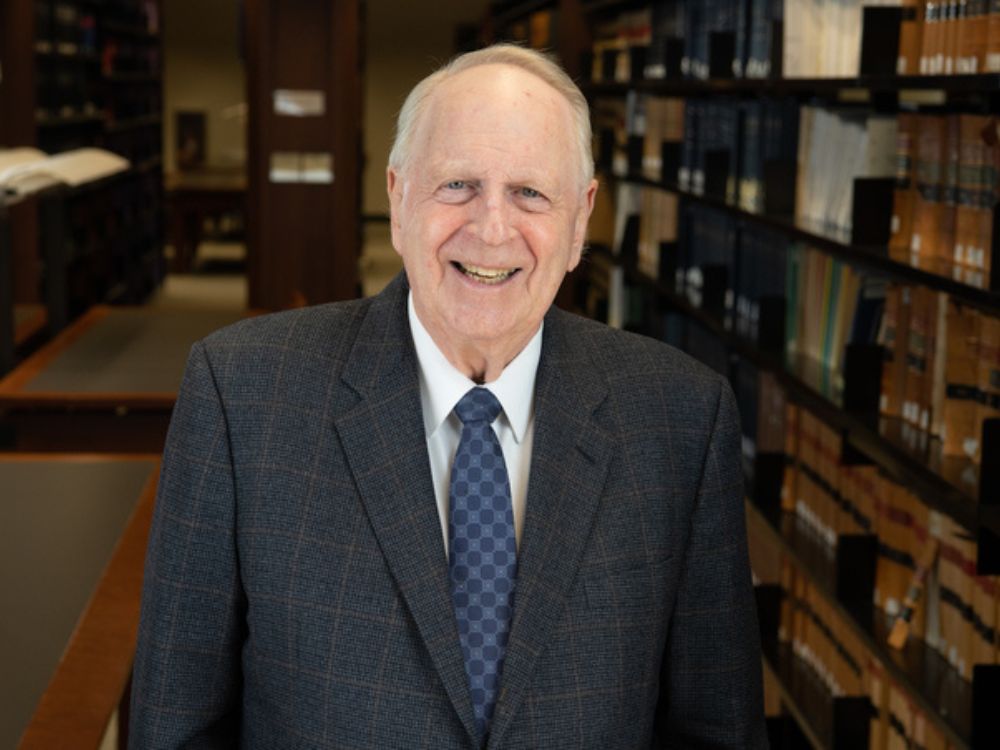
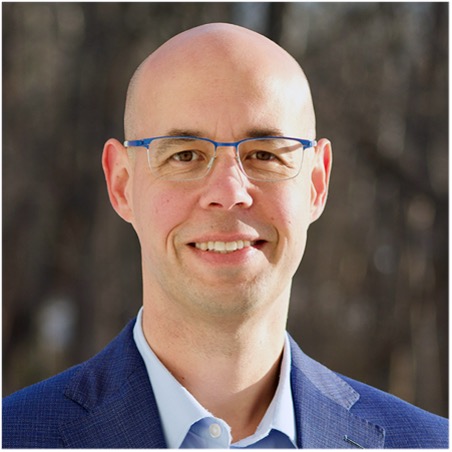
(Above from left, leaders in the patient-centered movement: Gloria
Reeves, MD, psychiatrist in the Division of Child and Adolescent Psychiatry, UM School of
Medicine; Selby; Mullins; and Karen Kauffman, PhD, CRNP-BC, associate
professor, UM School of Nursing.)
Selby said such data gathering is helping PCORI build an informational
comparative effectiveness infrastructure. He said although the agency
is still casting a wide net for suggestions, "as we now move into more
focused research, we hope to include all the past research results." He
said PCORI has begun to set firmer priorities. The first "targeted
research" topics are uterine fibroids, severe asthma, elderly falls,
and back pain. The list will grow, he said.
Selby began his Pumpian lecture by crediting its namesake, the late Paul A. Pumpian, as a pioneer in
patient-centered pharmacy decisions. Pumpian was a School of Pharmacy
graduate in 1950 and earned a JD from the University of Maryland School
of Law in 1953. Later, he was the highest-ranking pharmacist at the
U.S. Food and Drug Administration.
"For the notion of involving patients, Pumpian was the first I knew to
do patient-medication profiling," said Selby. "He understood that that
was important. So, I am so enthusiastic about speaking here for the
Pumpian lecture because Paul Pumpian laid part of the foundation for
[modern] pharmacy patient practices."
|
| Posting Date: 04/02/2013 |
| Contact Name: Steve Berberich |
| Contact Phone: 410-706-0023 |
| Contact Email: sberb001@umaryland.edu |
|